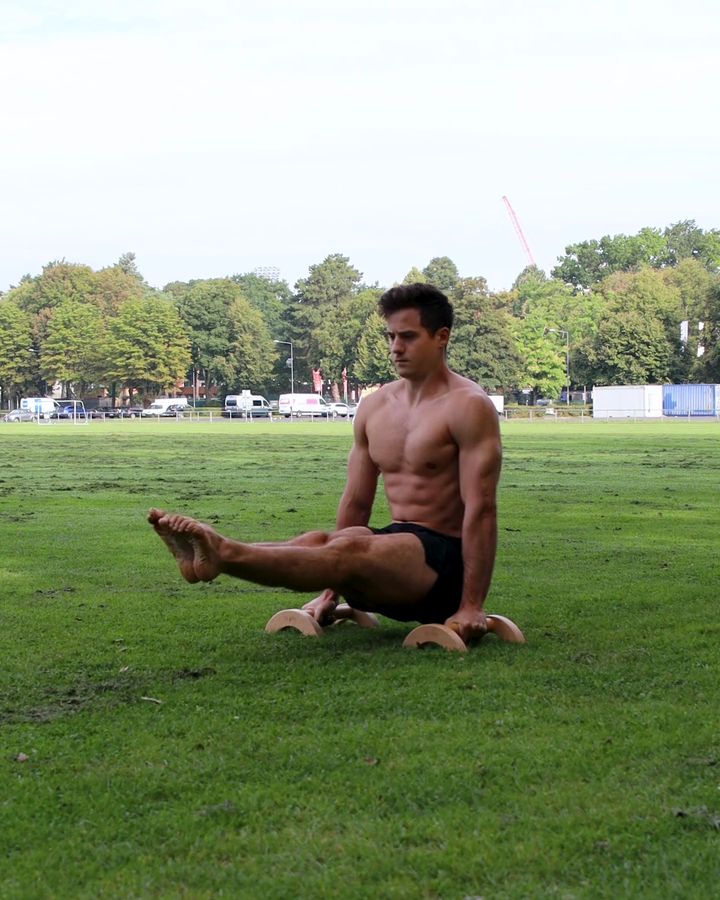
L-Sit
The L-sit is a well-known exercise from gymnastics that is also very popular in calisthenics. It requires strong abdominal muscles, some flexibility in the back of the legs, strength in the hip flexors, and stability in the shoulder girdle. Depending on the training equipment used for the L-sit, the exercise can be easier or more difficult.
Necessary equipment
L-Sit - the correct execution
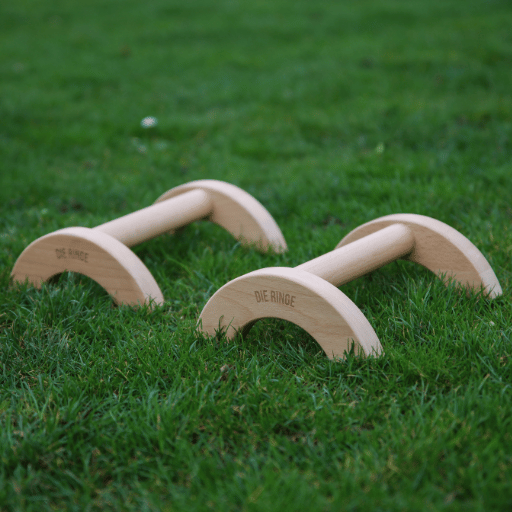
- Place the Parallettes parallel to each other and at shoulder width on a solid surface
- Sit between the Parallettes with legs extended
- Grab the Parallettes firmly while keeping your arms extended
- Powerfully push yourself up through the arms so that your glute no longer touches the floor
- Keep your shoulders low and actively push them away from your ears
- Lift both legs simultaneously until they are parallel to the floor
- Legs remain extended and feet are flexed
The exercise L-Sit on Parallettes is intended to be used as a hypertrophy exercise.
Which muscles are trained by L-Sit on Parallettes?


Primary trained muscles for L-Sit on Parallettes
Abs - The rectus abdominis, also known as the "abs," runs vertically along the front of the abdomen. It is responsible for bending the torso forward, such as during sit-ups, and lifting the pelvis. This muscle stabilizes the torso, supports the spine, and helps maintain good posture.
Hipflexors - The hip flexors, including the iliacus and psoas major muscles, allow you to bend your leg and torso forward.
Front Delts - The front part of the deltoid muscle, also known as the anterior shoulder, is located at the front of the shoulder. It is primarily involved in the forward movement of the arm, such as lifting the arm forward. It also assists in the internal rotation of the arm. This muscle is engaged in activities that involve lifting objects in front of the body or pushing forward.
Secondary trained muscles for L-Sit on Parallettes
Quadriceps - The quadriceps femoris is the large muscle at the front of your thigh. It extends your knee.
Chest - The pectoralis major muscle is the large muscle on your chest. It helps you bring your arm towards your body and rotate it inward.
Latissimus - The latissimus dorsi is a large muscle in your back that helps you pull your arm down and back. It also supports breathing and stabilizes the spine.
Rear Delts - The rear part of the deltoid muscle, also known as the posterior shoulder, is located at the back of the shoulder. It is responsible for the backward movement of the arm as well as external rotation. This muscle is particularly engaged during activities like rowing or pulling the arm back. The rear shoulder supports posture and helps pull the shoulder blades back, contributing to shoulder stabilization.
Calisthenics training, developed by sports scientists and optimized by smart algorithms, for your best workout.
Over 1000 five-star reviews on App Store and Google Play.


Alternative variants of L-Sit:
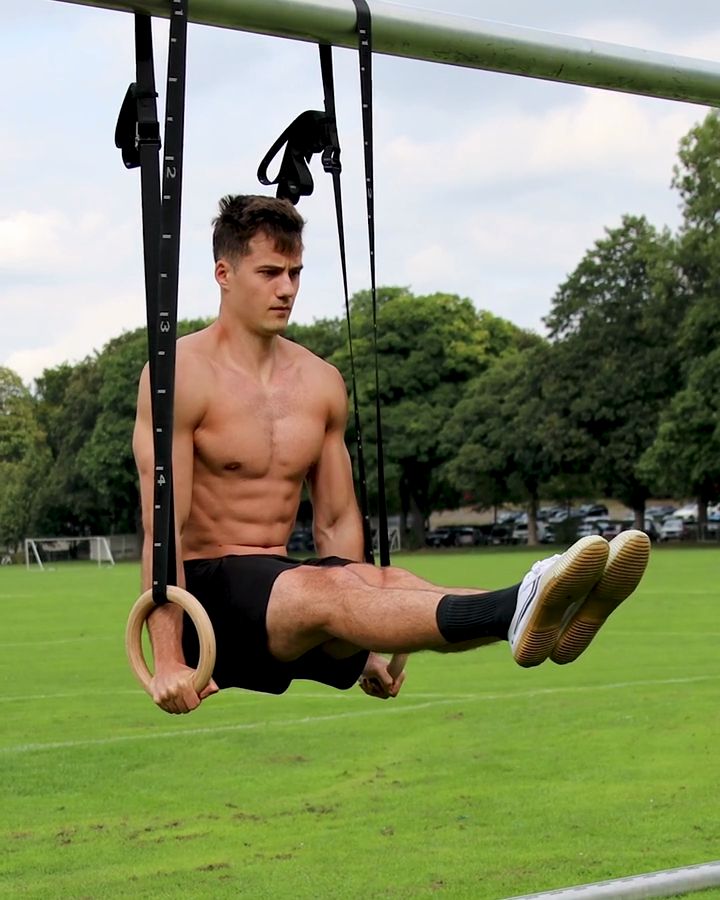
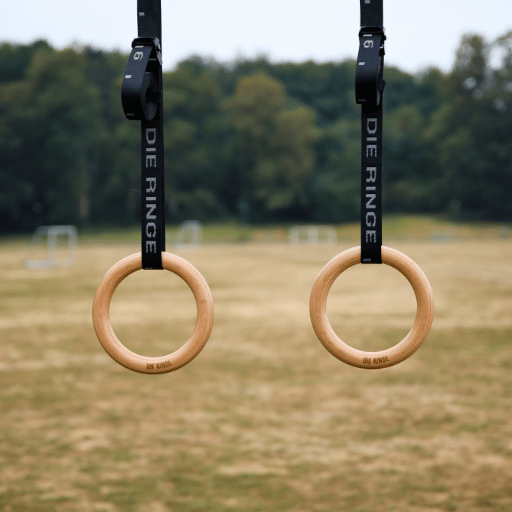
L-Sit on Gymnastic Rings
The L-sit on the rings requires significantly more strength in the shoulder girdle because the rings tend to move outward. This means the upper body adductors have to keep the rings close to the body, which places extra demand on the chest and latissimus to stabilize the position. The L-sit on the rings is therefore another, more difficult progression alongside the V-Sit.
Necessary equipment
L-Sit on Gymnastic Rings - the correct execution
- Start in a support position with straight arms and a stable core
- Keep your arms fully extended throughout the exercise
- Ensure your shoulders remain low and stable
- Flex your hips to 90 degrees, forming an L-shape with your body
- Keep your feet at least at the level of the rings
L-Sit on Parallel Bars
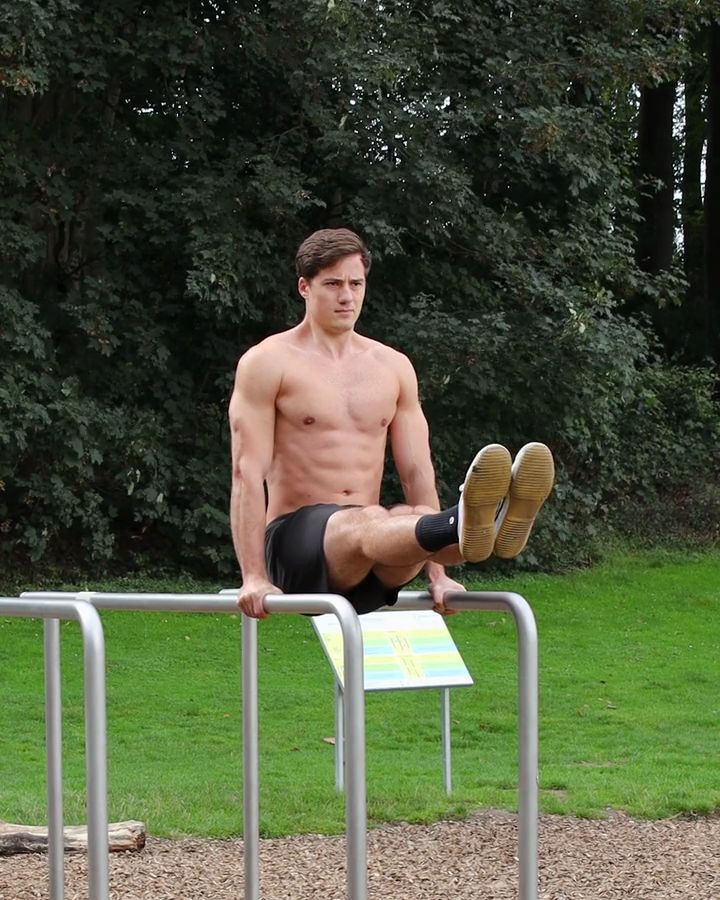
The L-sit on the parallel bars is very similar to the L-sit on parallettes. The only advantage of the parallel bars is that, in theory, the feet could be positioned below the bars, meaning the legs don’t necessarily have to be held at a 90-degree angle. This allows beginners to hold a kind of L-sit on the parallel bars, whereas on parallettes, their feet would touch the ground.
Necessary equipment

L-Sit on Parallel Bars - the correct execution
- Start in support
- Bend your hips at least 90 degrees
- Your legs are stretched and above the bar
- Try to keep your hips between your arms
- Arms remain extended throughout
- Shoulders are low
L-Sit on the Floor
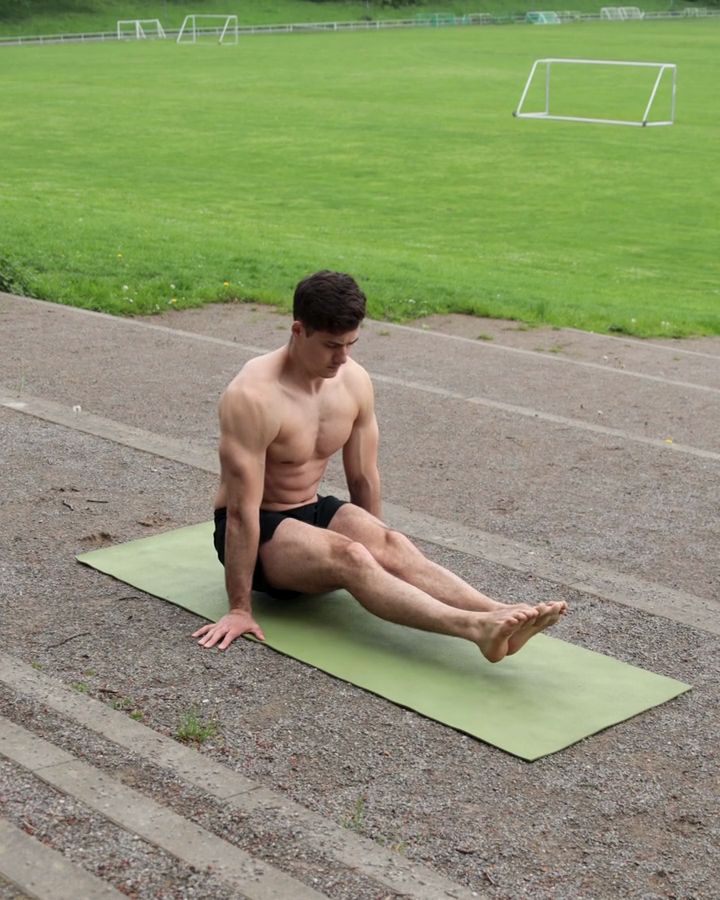
The L-sit on the floor requires the greatest flexibility in the back of the legs and the highest Compression in the hips because the legs/feet must be held at least at a 90-degree angle.
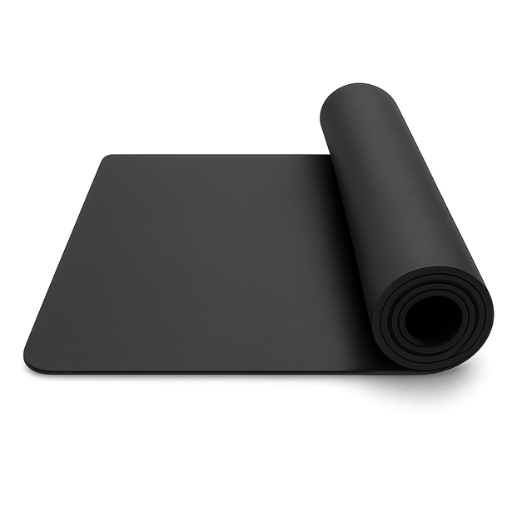
Necessary equipment
L-Sit on the Floor - the correct execution
- Start sitting on the floor
- Press your hand palms into the floor
- Push your shoulders down and extend your arms completely
- Lift your lower body off the floor with legs extended
- Slide your glute back between your arms to shift your body weight
Similar exercises to L-Sit on Parallettes
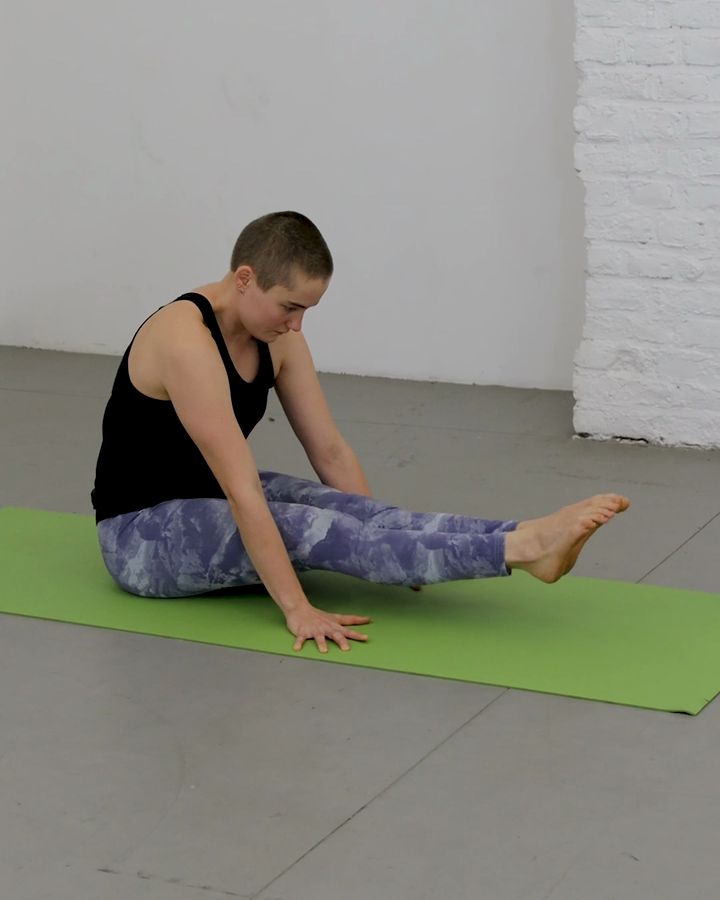
Compressions
This exercise aims to improve the mobility of your hips. As a beginner, you will particularly benefit from it, as it helps you build the foundation for advanced exercises like the L-Sit.
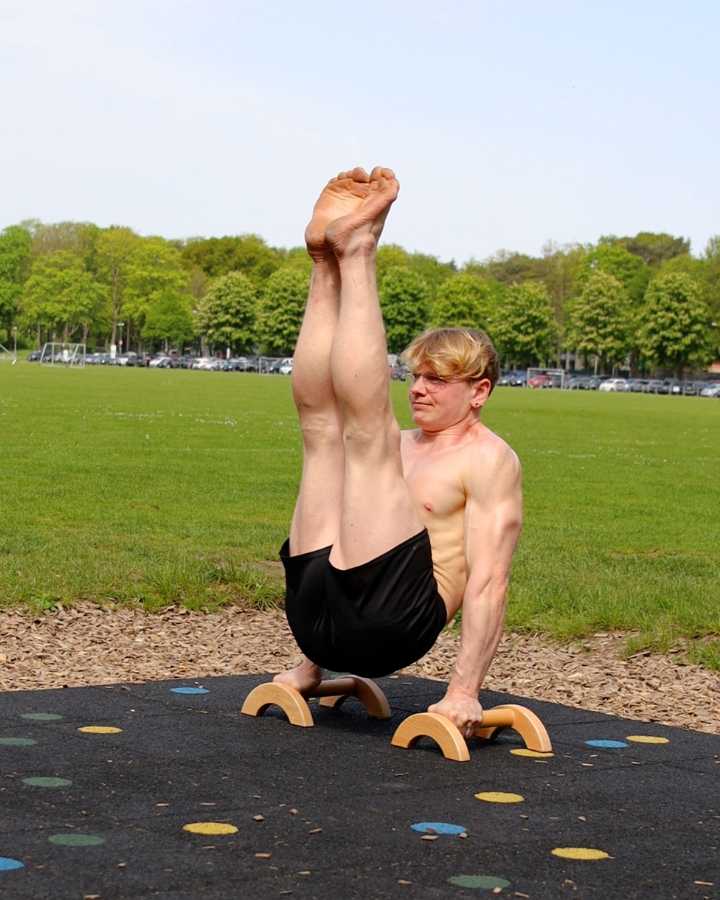
V-Sit with parallettes
The V-Sit is a challenging exercise that requires significant strength in the abdominal muscles, hip flexors, and high flexibility in the hamstrings. The body forms a “V” shape by lifting the legs and upper body off the ground and holding them in the air. This exercise is a more advanced variation of the L-Sit, as it demands greater core tension and flexibility. The V-Sit is often confused with the Boat Pose.
This could also be interesting
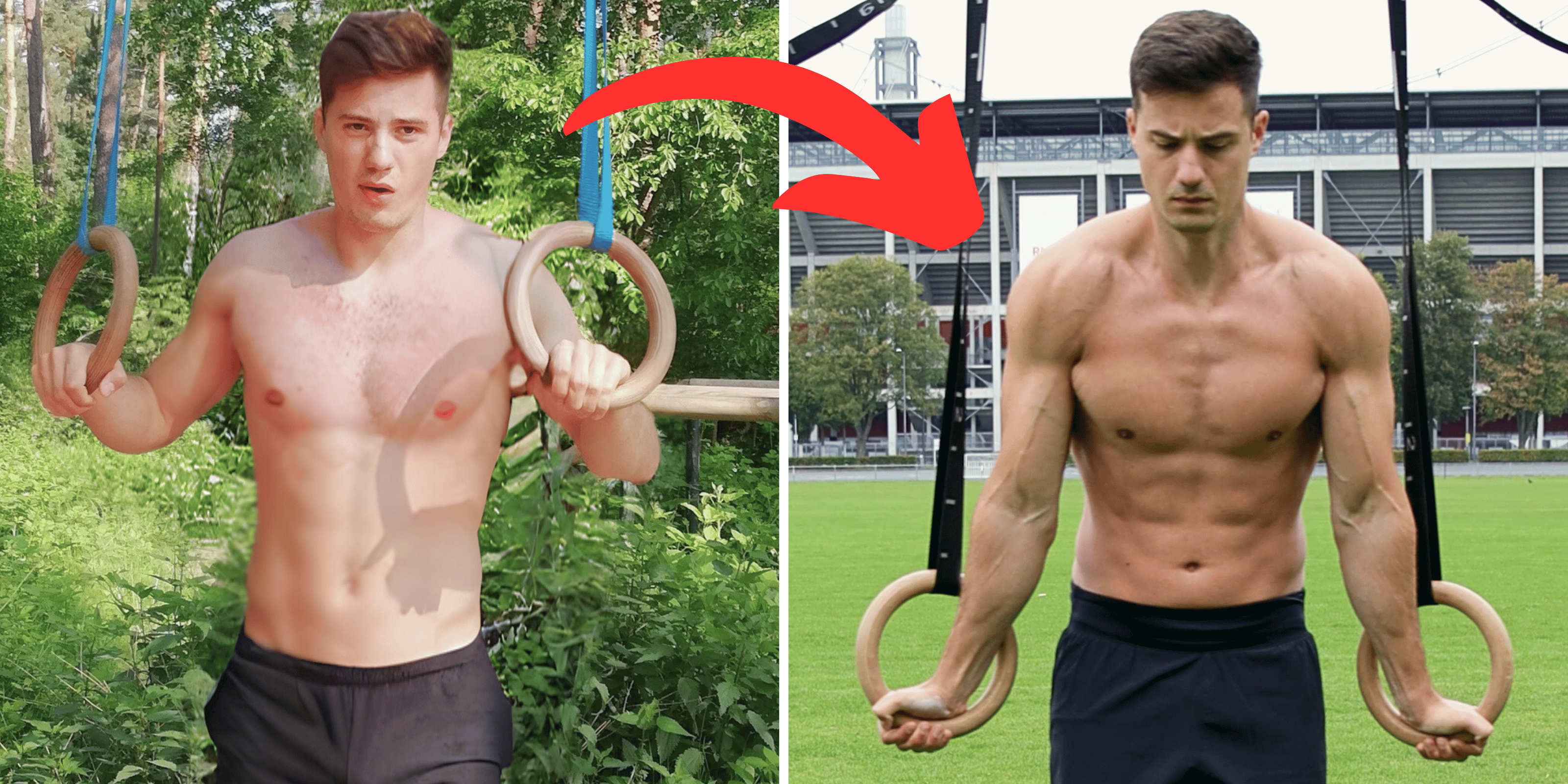
Calisthenics Body Transformation – How to Build a Strong, Lean, and Athletic Physique
Transform your body with Calisthenics! Build muscle, burn fat & achieve a shredded physique with bodyweight training. See real before & after results!
Complete Calisthenics Skills List – 40+ Exercises from Beginner to Pro
Which calisthenics skills should you learn first? And which ones will really help you progress? In this article, you’ll find a complete list of over 40 exercises – from the very basics to the toughest moves for professionals. Each exercise comes with instructions, so you can immediately integrate them into your training.
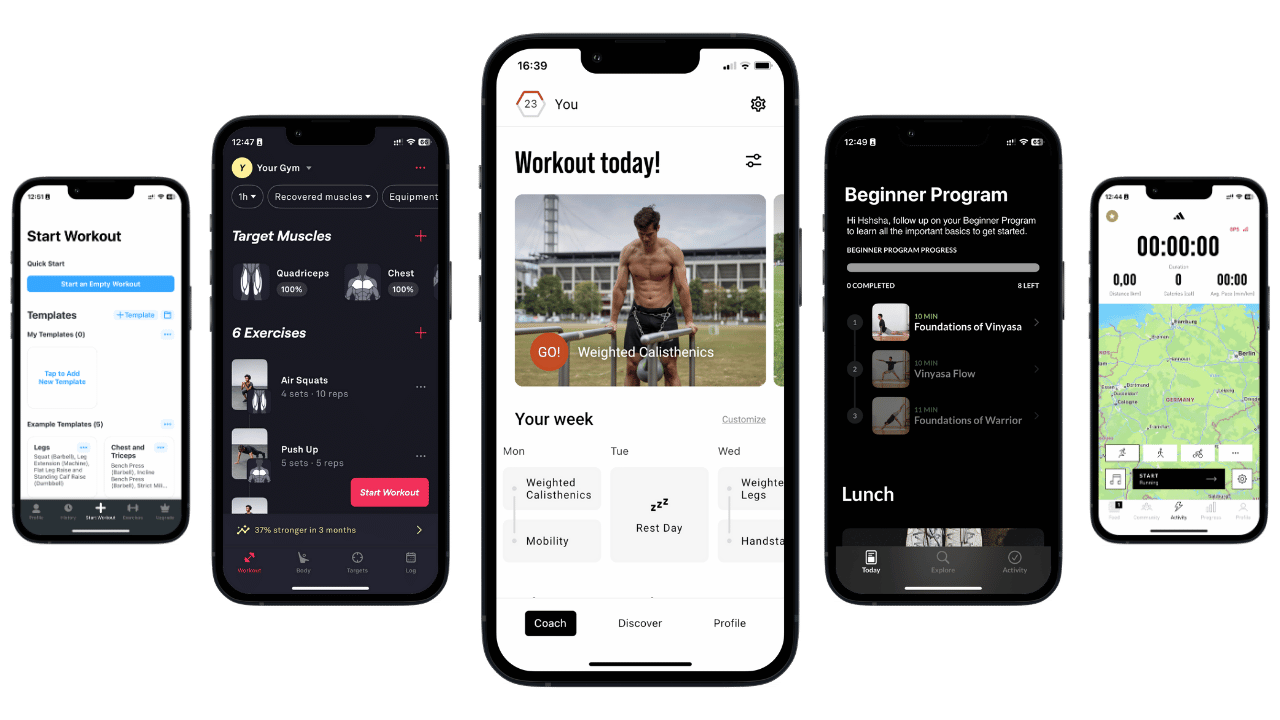
The Best Fitness Apps in 2025: Our Top 10 Recommendations
Don’t miss the best fitness apps of 2025: surprising favorites, free options, and perfect tools for your workouts. Find the ideal app today!