Hanging Leg Raises
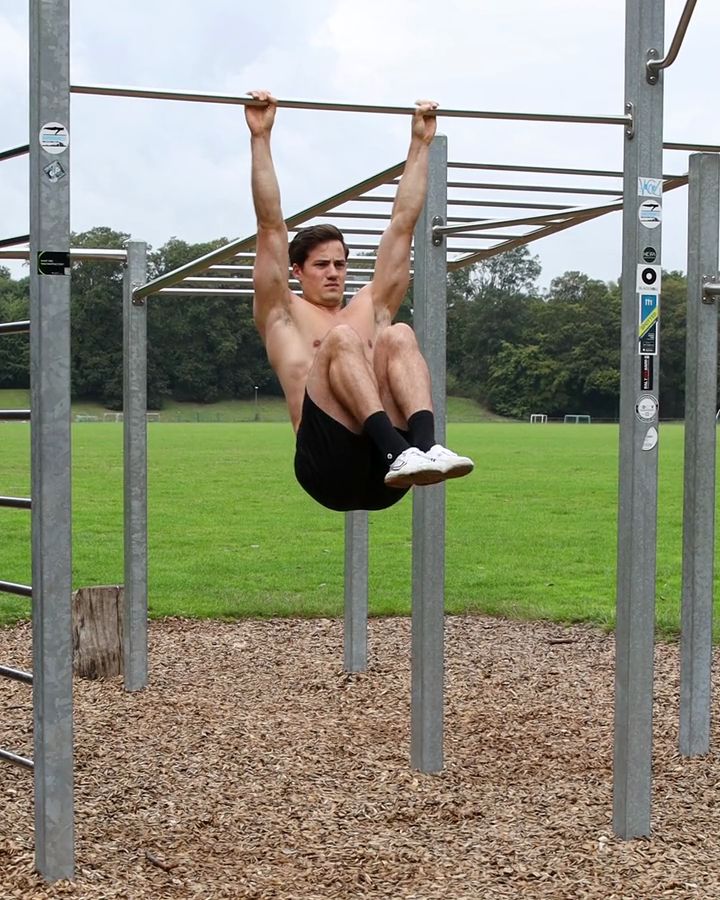
Hanging leg raises are an effective exercise for training the abdominal muscles, particularly the lower abs. In this exercise, you hang from a bar and lift your straight legs in a controlled manner up to hip height. This exercise requires core strength and strong grip strength. Compared to leg raises on the dip bar or rings, hanging leg raises are better suited for focusing on the abdominal muscles since you don't need to support your body. Additionally, they are an excellent preparation for the more complex exercise toes to bar.
Necessary equipment

Hanging Leg Raises - the correct execution
- Start in a hang position with extended arms
- Grab the bar wider than shoulder width
- Bend your hips and lift your feet to the bar
- Bend the knees at the same time
- Keep tension in the torso
- Lower yourself slowly and controlled back into the hang position
The exercise Hanging Leg Raises is intended to be used as a hypertrophy exercise.
Which muscles are trained by Hanging Leg Raises?


Primary trained muscles for Hanging Leg Raises
Abs - The rectus abdominis, also known as the "abs," runs vertically along the front of the abdomen. It is responsible for bending the torso forward, such as during sit-ups, and lifting the pelvis. This muscle stabilizes the torso, supports the spine, and helps maintain good posture.
Forearm - The forearm muscles are divided into flexors and extensors. The flexors bend your wrist, while the extensors straighten it.
Secondary trained muscles for Hanging Leg Raises
Hipflexors - The hip flexors, including the iliacus and psoas major muscles, allow you to bend your leg and torso forward.
Latissimus - The latissimus dorsi is a large muscle in your back that helps you pull your arm down and back. It also supports breathing and stabilizes the spine.
Calisthenics training, developed by sports scientists and optimized by smart algorithms, for your best workout.
Over 1000 five-star reviews on App Store and Google Play.


Alternative variants of Hanging Leg Raises:
Hanging Leg Raises with gym rings
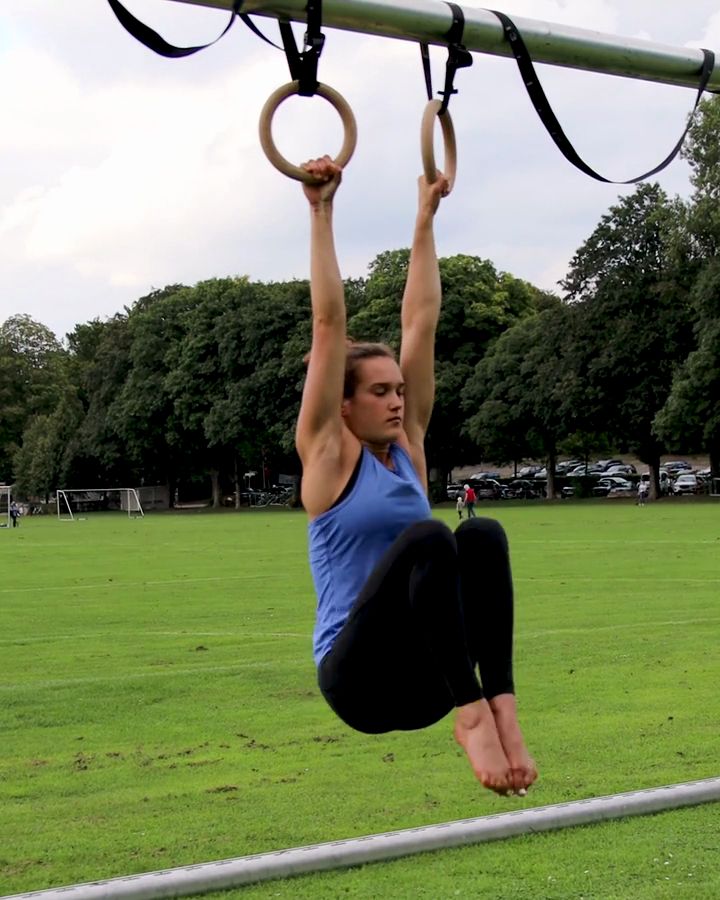
When performing leg raises on gymnastics rings, there are no significant differences compared to leg raises on a bar, except that the rings are less stable, which can cause you to start swinging. If this happens, you can stop the swing with your feet. The swinging occurs because you lift your legs upward like on a swing, generating momentum. To prevent this, you should raise your legs slowly and in a controlled manner.
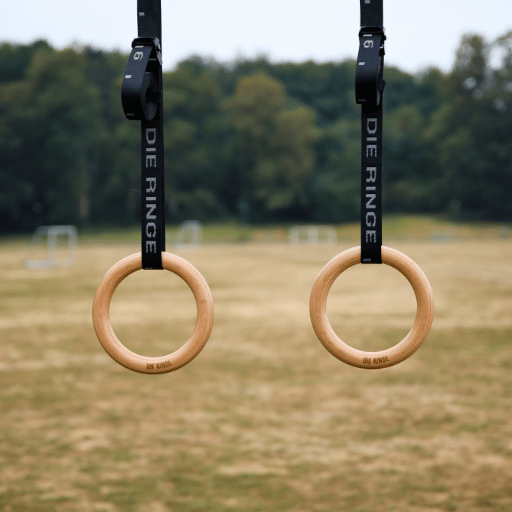
Necessary equipment
Hanging Leg Raises with gym rings - the correct execution
- Start in a hang position with extended arms
- Take the shoulder blades back down
- Lift the knees to the chest
- Slowly lower the legs again
Similar exercises to Hanging Leg Raises
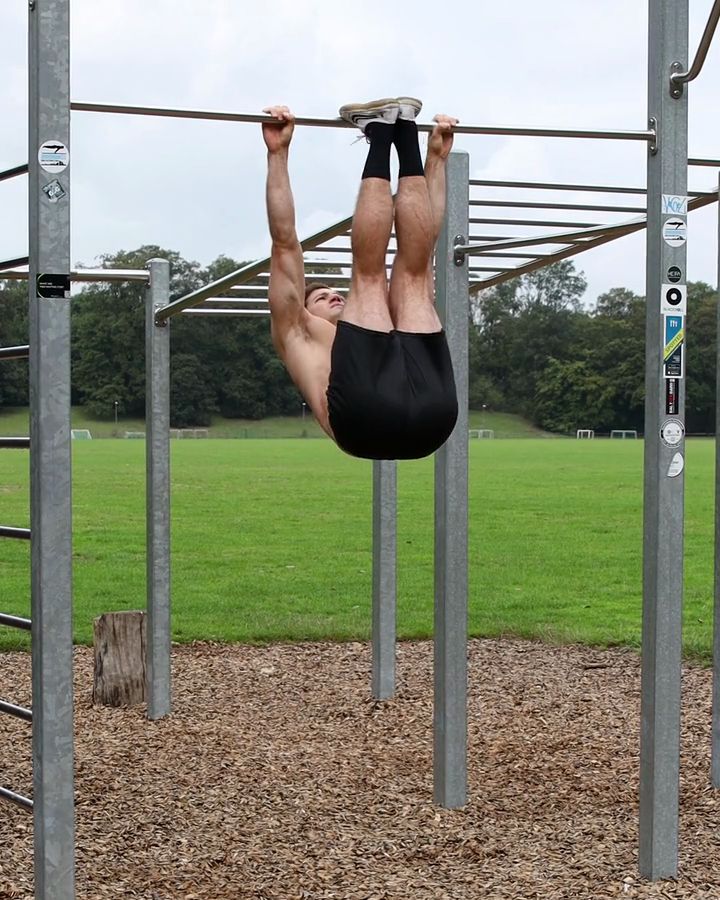
Toes To Bar
Toes to Bar is a dynamic exercise performed on a pull-up bar where the legs are swung upward from a hanging position until the toes touch the bar. In German, this exercise is also called "Anristen." It can also be performed on gymnastic rings, which offers advantages, such as allowing the toes to move further past the line of the pull-up bar, which can be helpful for transitioning into a Skin the Cat.
Similar to the hanging leg raise, this exercise specifically targets the lower abdominal muscles. Additionally, it engages the hip flexors and improves grip strength.
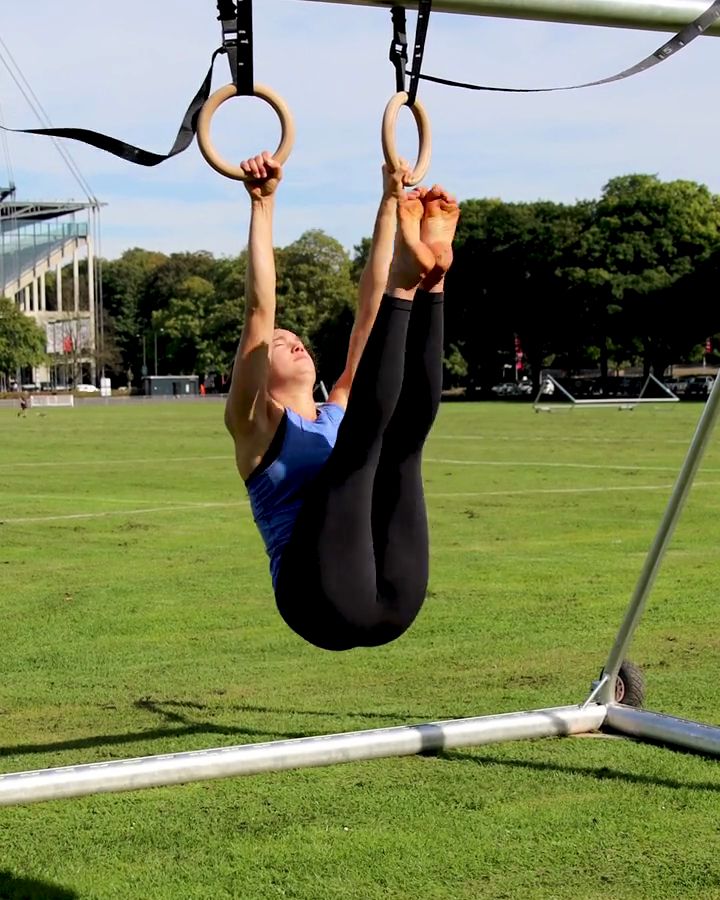
Toes To Rings with gym rings
Toes to rings effectively train the entire core, especially the abdominal muscles and hip flexors. Compared to the classic version on the bar, rings provide a slightly modified option. This exercise can be considered an advanced version of knee raises on the rings. If you want to target your abs, perform the exercise without momentum—unless you’re training for a CrossFit competition. A helpful side effect of this exercise: the L-sit will become easier.
This could also be interesting
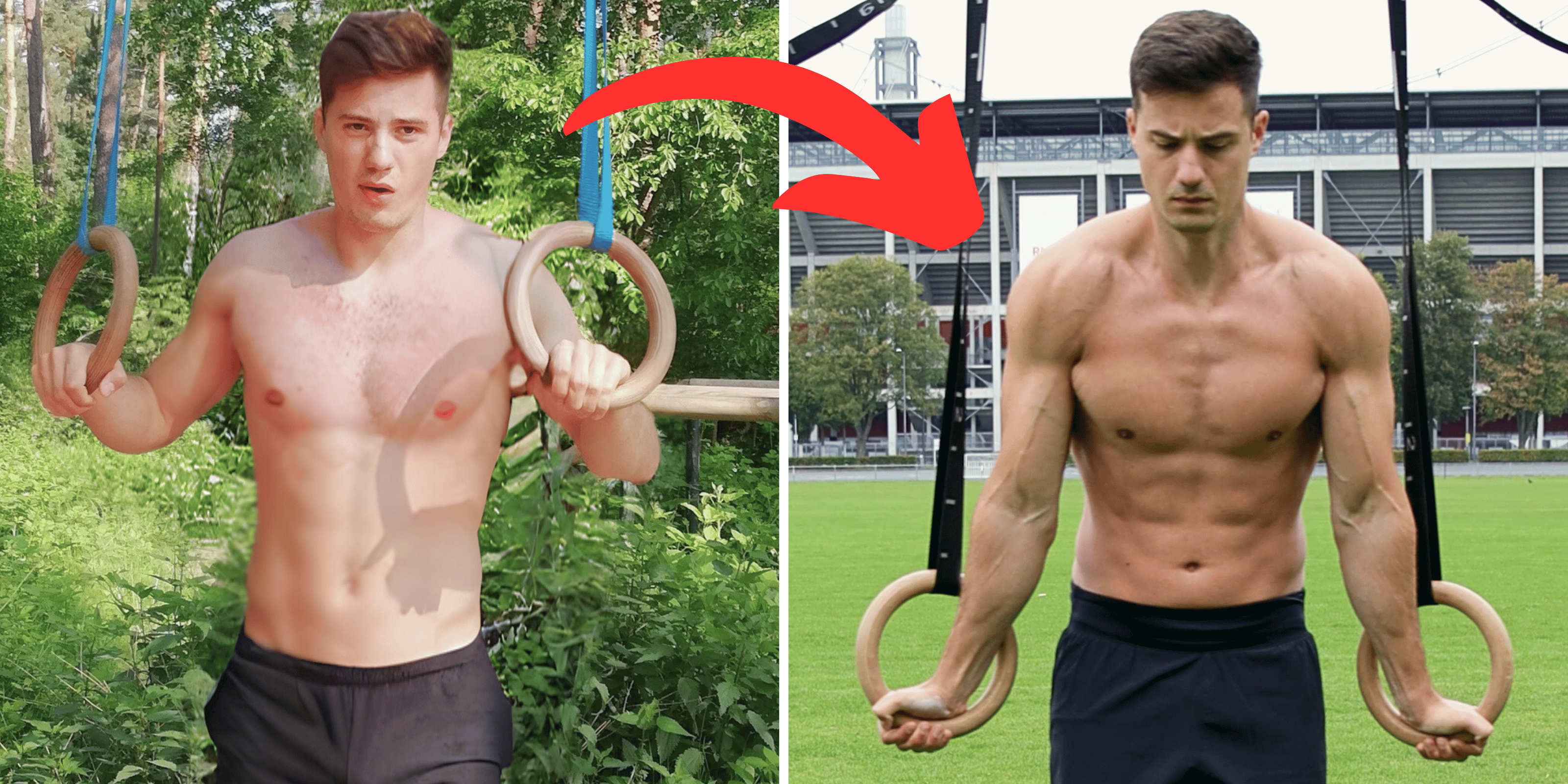
Calisthenics Body Transformation – How to Build a Strong, Lean, and Athletic Physique
Transform your body with Calisthenics! Build muscle, burn fat & achieve a shredded physique with bodyweight training. See real before & after results!
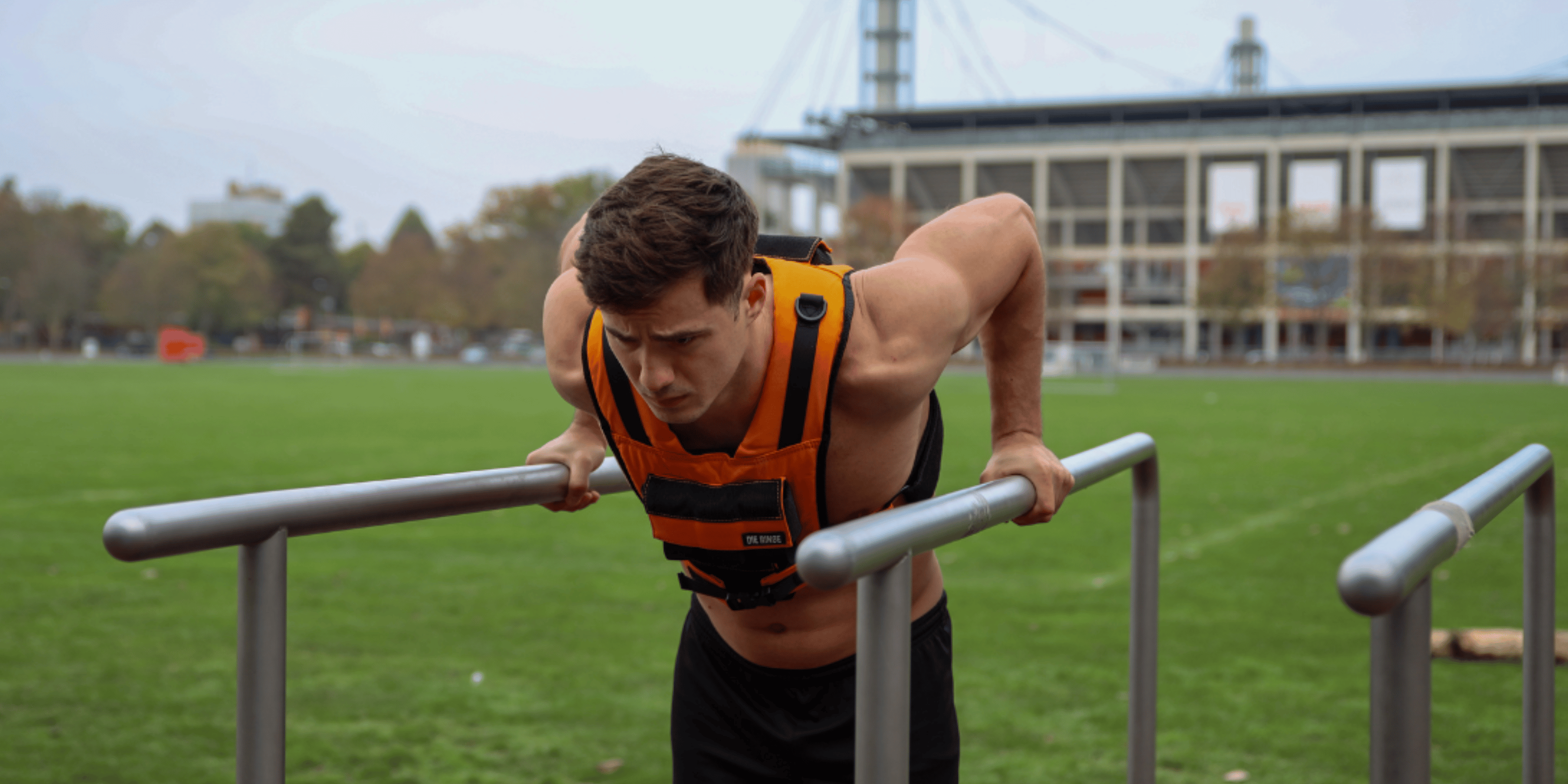
Complete Calisthenics Skills List – 40+ Exercises from Beginner to Pro
Which calisthenics skills should you learn first? And which ones will really help you progress? In this article, you’ll find a complete list of over 40 exercises – from the very basics to the toughest moves for professionals. Each exercise comes with instructions, so you can immediately integrate them into your training.
The Best Fitness Apps in 2025: Our Top 10 Recommendations
Don’t miss the best fitness apps of 2025: surprising favorites, free options, and perfect tools for your workouts. Find the ideal app today!