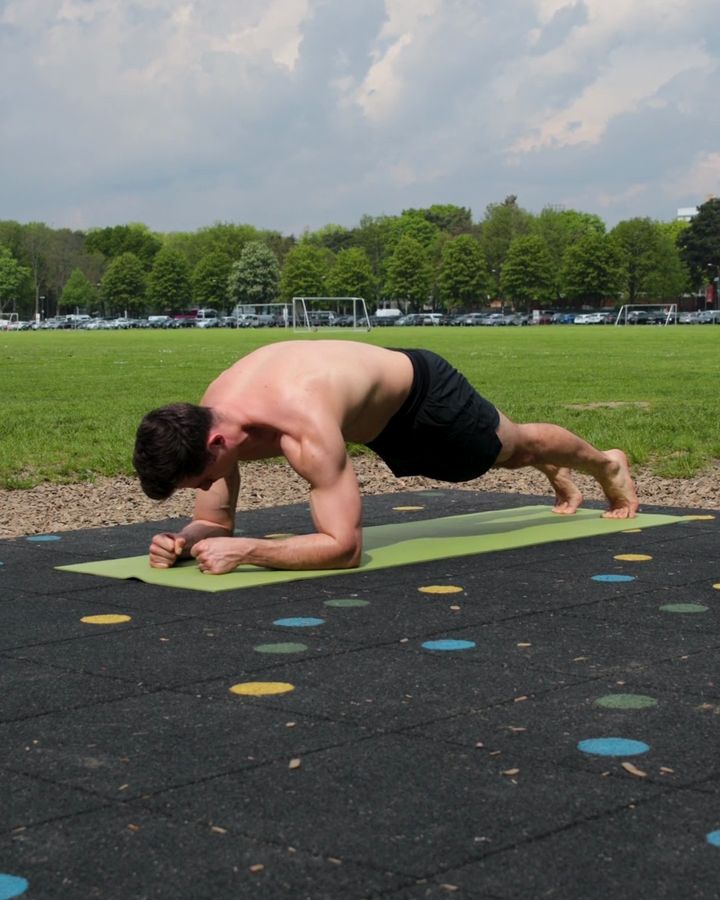
Plank
The plank is one of the most widespread exercises for the abdominal muscles. No equipment is needed, so it can be done anywhere. However, a common mistake is not tightening the glutes and allowing the body to sag. This means the abdominal muscles are not working, and instead, the passive musculoskeletal system, including the spine, bears the load. Read here to find out what you need to watch out for to perform it correctly.
Necessary equipment
Plank - the correct execution
- Start in the plank position on the forearms
- Feet and arms are shoulder width apart
- Make sure the core is firm and push the lower back out (PPT)
- Also keep the hips as straight as possible
- Keep permanent tension in core and glutes
The exercise Plank is intended to be used as a hypertrophy exercise.
Which muscles are trained by Plank?


Primary trained muscles for Plank
Abs - The rectus abdominis, also known as the "abs," runs vertically along the front of the abdomen. It is responsible for bending the torso forward, such as during sit-ups, and lifting the pelvis. This muscle stabilizes the torso, supports the spine, and helps maintain good posture.
Secondary trained muscles for Plank
Front Delts - The front part of the deltoid muscle, also known as the anterior shoulder, is located at the front of the shoulder. It is primarily involved in the forward movement of the arm, such as lifting the arm forward. It also assists in the internal rotation of the arm. This muscle is engaged in activities that involve lifting objects in front of the body or pushing forward.
Calisthenics training, developed by sports scientists and optimized by smart algorithms, for your best workout.
Over 1000 five-star reviews on App Store and Google Play.


Similar exercises to Plank
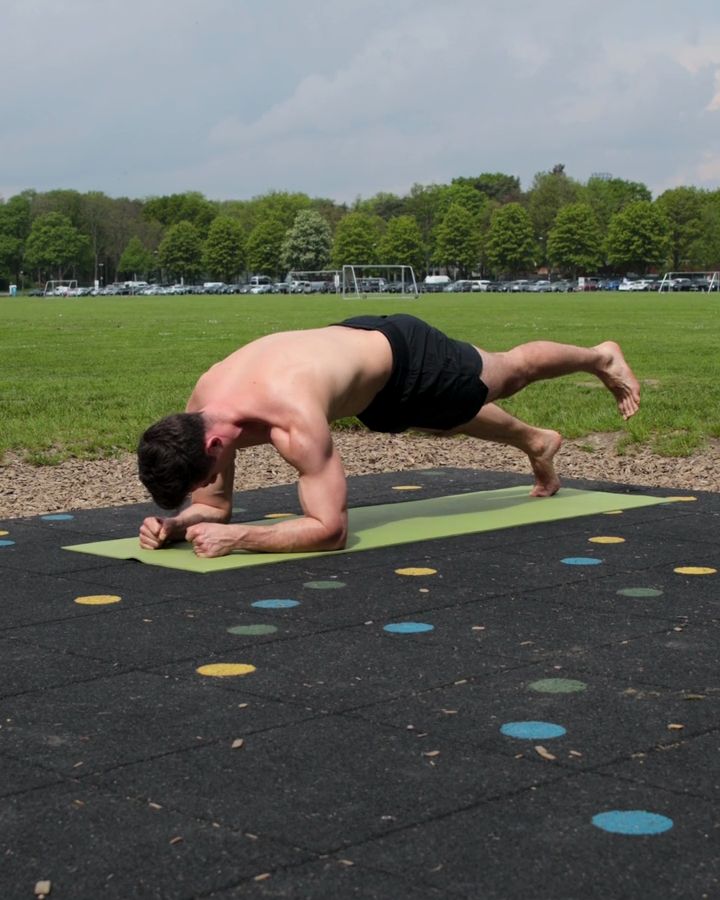
Plank Leg Lifts
Plank leg lifts combine the core stability of the classic plank with a dynamic leg lift, which engages not only the abs and back muscles but also the glutes and leg muscles more intensively. By alternating leg lifts, balance is challenged, and the core is activated more deeply. Compared to the forearm plank, this variation involves the lower body more, making the exercise more challenging and versatile.
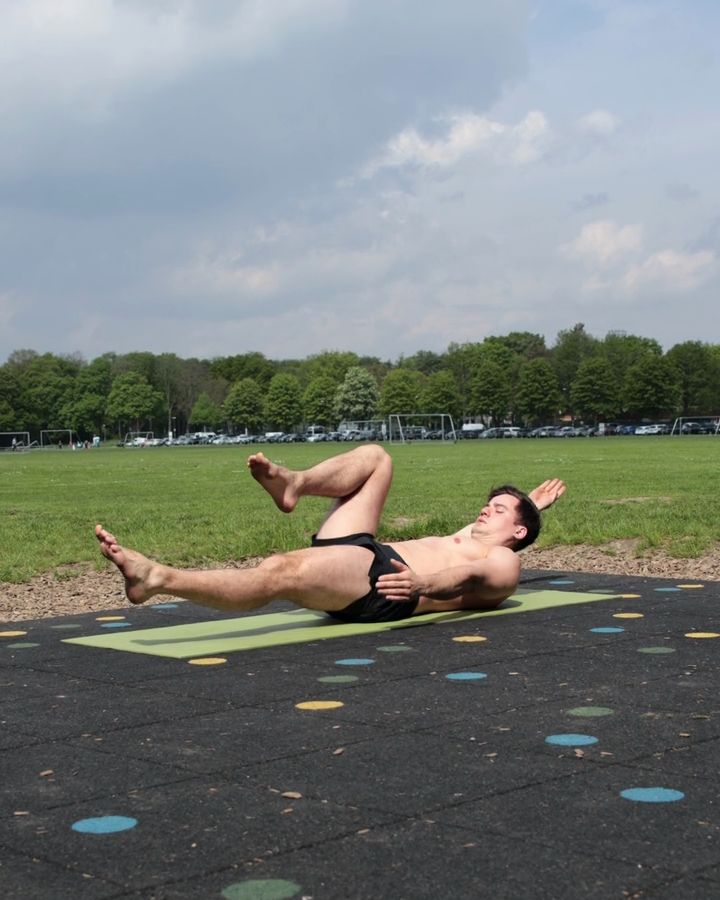
Dead Bug
The Dead Bug exercise falls under the category of core exercises and aims to strengthen the abdominal muscles. It is particularly effective for improving stability and control throughout the entire body. During the exercise, the arms and legs are moved alternately. It is important to keep the lower back in contact with the floor to maintain tension in the abdominal muscles.
A similar exercise is the Bird-Dog, where you start in a quadruped position instead of lying on your back.
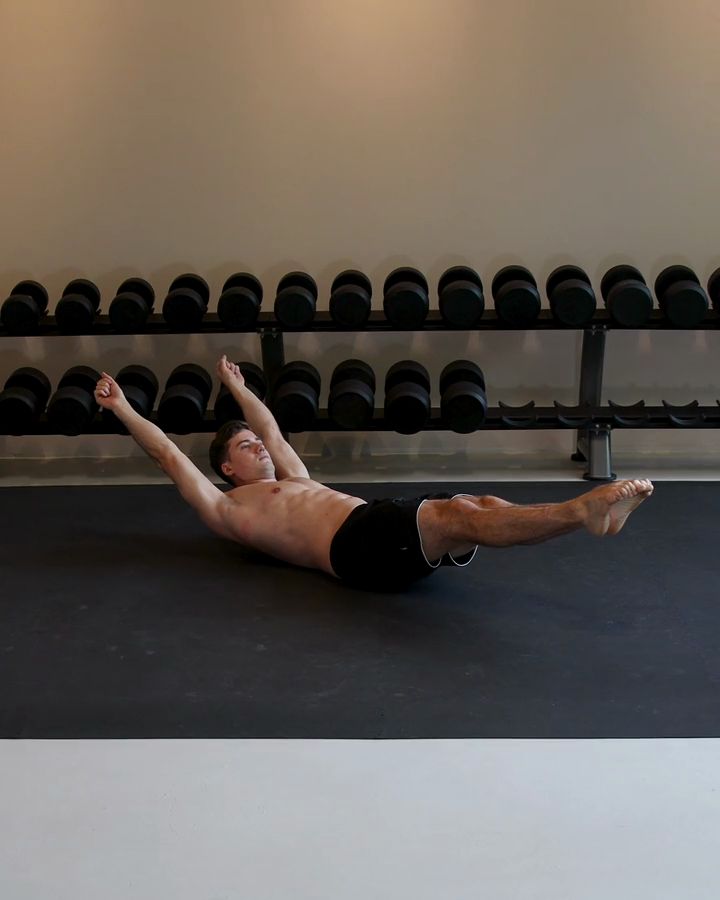
Hollow Body Hold
In the hollow body hold, you lie on your back and tense the entire body while pressing the lower back firmly into the floor. This static exercise primarily targets the abdominal muscles and is especially popular in gymnastics and calisthenics to improve core strength.
A similar exercise is the forearm plank, where the abdominal and core muscles are also strengthened through static holding work.
This could also be interesting
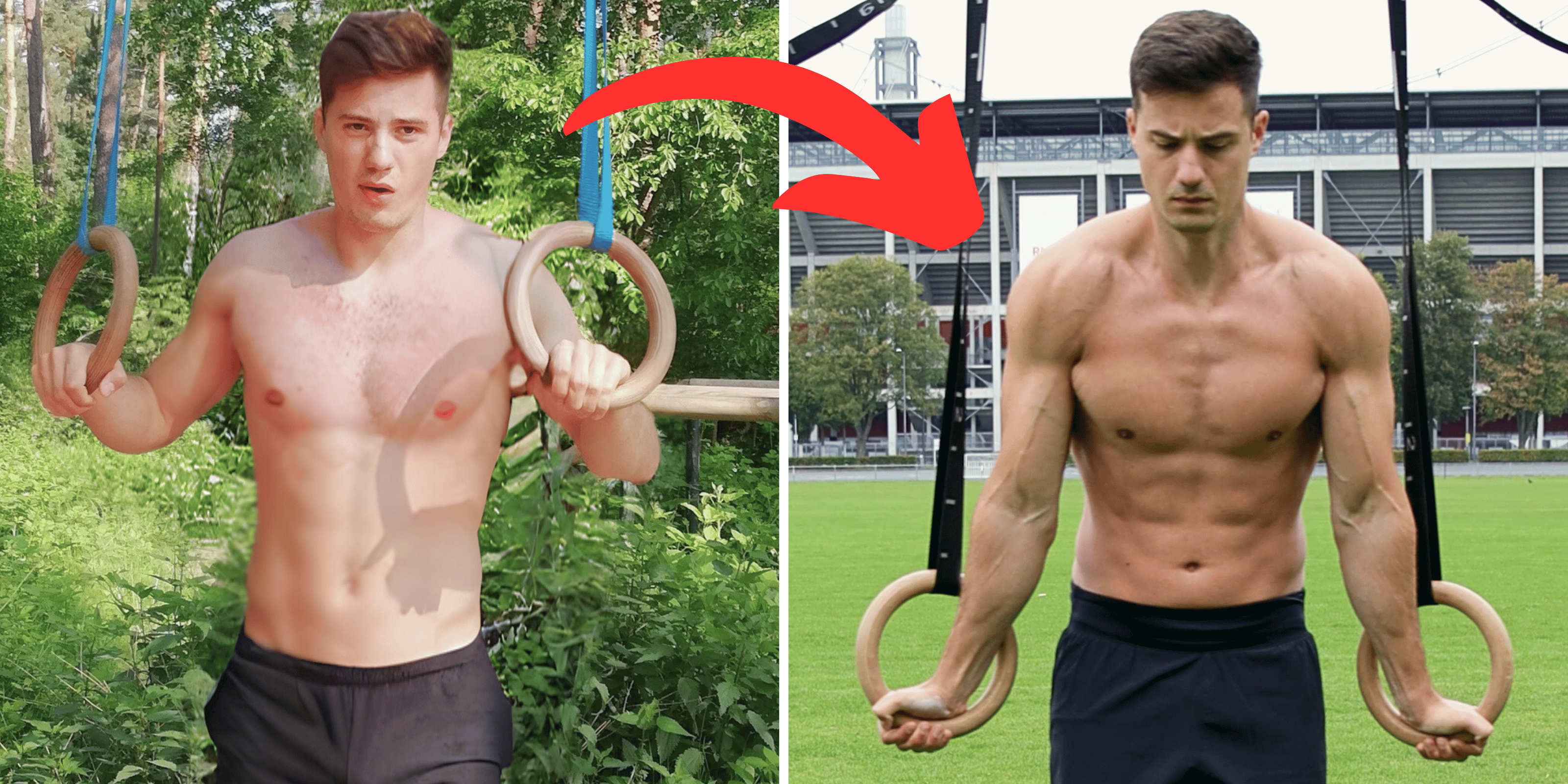
Calisthenics Body Transformation – How to Build a Strong, Lean, and Athletic Physique
Transform your body with Calisthenics! Build muscle, burn fat & achieve a shredded physique with bodyweight training. See real before & after results!
Complete Calisthenics Skills List – 40+ Exercises from Beginner to Pro
Which calisthenics skills should you learn first? And which ones will really help you progress? In this article, you’ll find a complete list of over 40 exercises – from the very basics to the toughest moves for professionals. Each exercise comes with instructions, so you can immediately integrate them into your training.
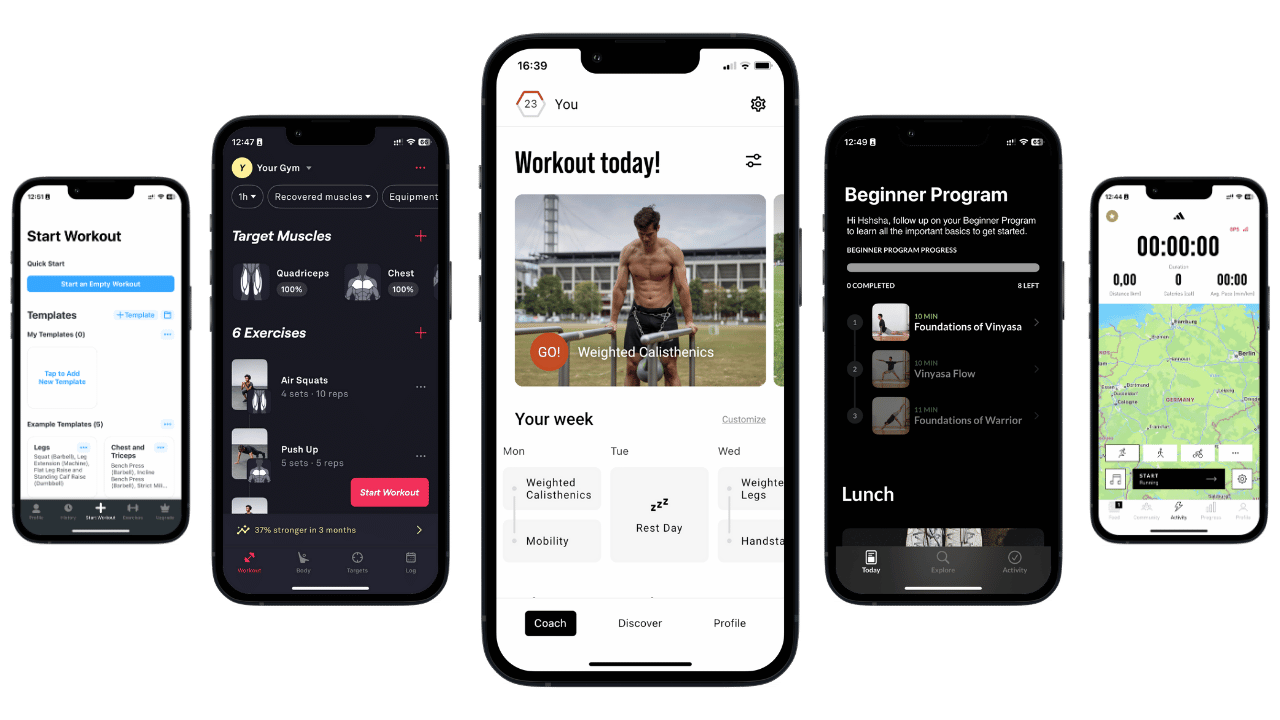
The Best Fitness Apps in 2025: Our Top 10 Recommendations
Don’t miss the best fitness apps of 2025: surprising favorites, free options, and perfect tools for your workouts. Find the ideal app today!