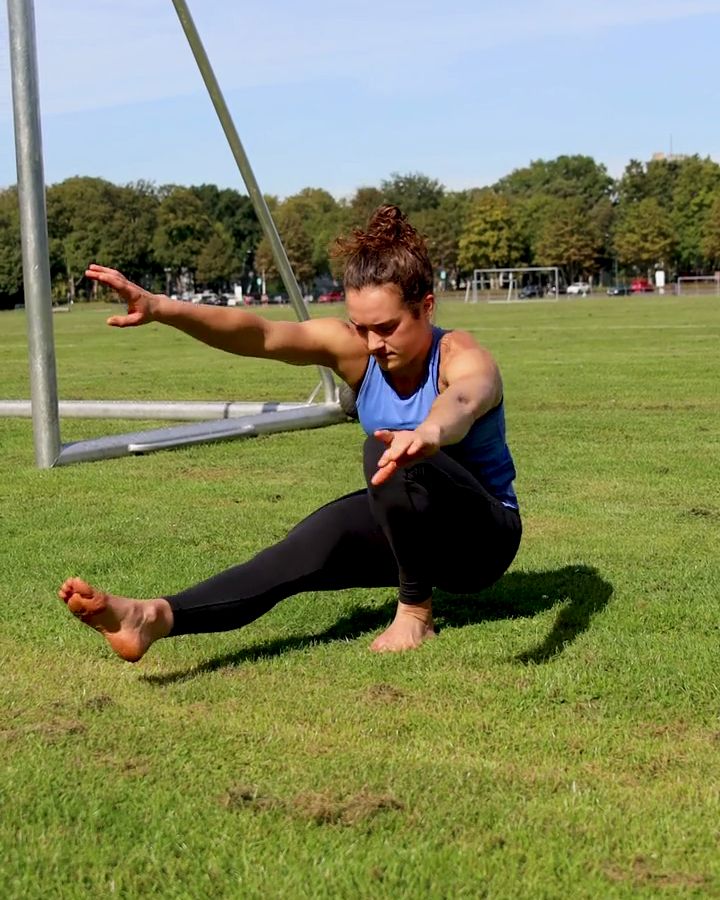
Pistol Squats
The pistol squat is a challenging single-leg squat where you lower yourself deep into a squat while keeping the other leg extended forward. This exercise requires not only strength but also good balance and flexibility. It particularly targets the thighs, glutes, and core muscles. Those who want to work their way up to pistol squats can start with supportive exercises like the Bulgarian split squat or deep squat with weight to build the necessary strength and flexibility. Progressions of the pistol squat, which are explained further below, are also useful for learning the movement. Even more complex is the so-called dragon squat, where the free leg is crossed behind the standing leg as you lower into the squat.
Pistol Squats - the correct execution
- Stand upright with your feet hip-width apart
- Shift your weight to your left leg and lift your right leg off the floor
- Keep your arms in front of you to help balance and shift your body's center of gravity forward
- Bend your left knee and bring your glute as close to the floor as possible
- Your heel should remain on the ground throughout
- Extend your right leg forward so that the foot does not touch the floor
- Keep your chest upright and your back as straight as possible
- Make sure that you tend to push your bent knee outward to stabilize it
- Push yourself powerfully upwards with the left leg back to the standing position
The exercise Pistol Squats is intended to be used as a hypertrophy exercise.
Which muscles are trained by Pistol Squats?


Primary trained muscles for Pistol Squats
Quadriceps - The quadriceps femoris is the large muscle at the front of your thigh. It extends your knee.
Calisthenics training, developed by sports scientists and optimized by smart algorithms, for your best workout.
Over 1000 five-star reviews on App Store and Google Play.


Alternative variants of Pistol Squats:
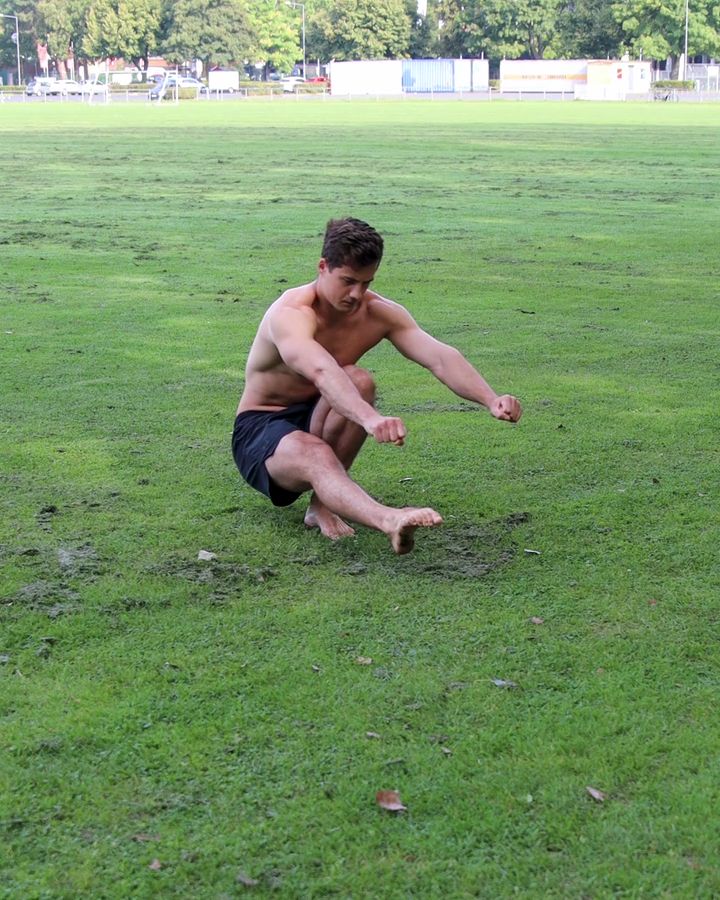
Pistol Squat Hold
In contrast to the classic pistol squat, the single-leg static squat, also known as the pistol squat hold, focuses on statically holding the deep position. This variation intensifies the demand for balance, significantly improving control over the movement. It is ideal for building the necessary strength and stability required for performing a full pistol squat.
Pistol Squat Hold - the correct execution
- Start in the deep pistol squat position
- Bend your left knee to the maximum so that your thigh and calf are touching
- Extend your right leg forward so that the foot does not touch the ground
- Shift your body weight to the entire foot
- Keep your chest upright and your back as straight as possible
- Make sure that you tend to push your bent knee outwards to stabilize it
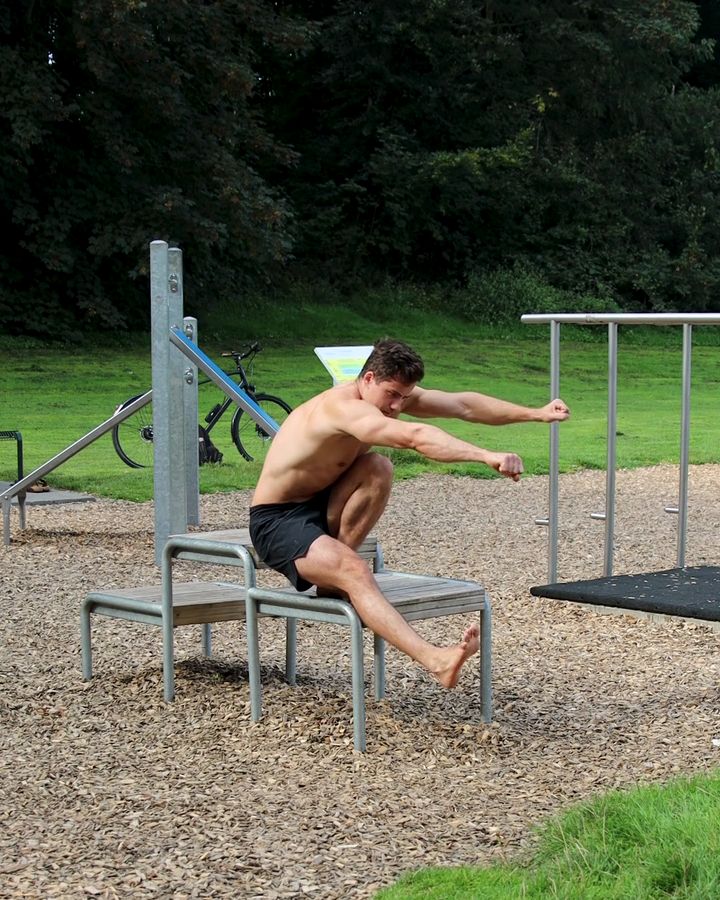
Elevated Pistol Squats
To learn or improve the pistol squat, elevated pistol squats can be a useful intermediate step. In this variation, you stand on an elevated surface, which allows you to lower the free leg further without touching the ground. This makes the movement easier and reduces flexibility requirements, allowing you to focus more on proper technique and strength development.
Necessary equipment

Elevated Pistol Squats - the correct execution
- Stand upright with your left foot on the edge of a box
- The right leg hovers in the air
- Keep your arms in front of you to help balance and shift your body's center of gravity forward
- Bend your left knee and bring the glute as close as possible to the box
- Your left heel should remain on the ground throughout
- Extend your right leg forward so that the foot does not touch the ground
- Keep your chest upright and your back as straight as possible
- Make sure that you tend to push your bent knee outwards to stabilize it
- Powerfully push yourself up with your left leg back to the standing position
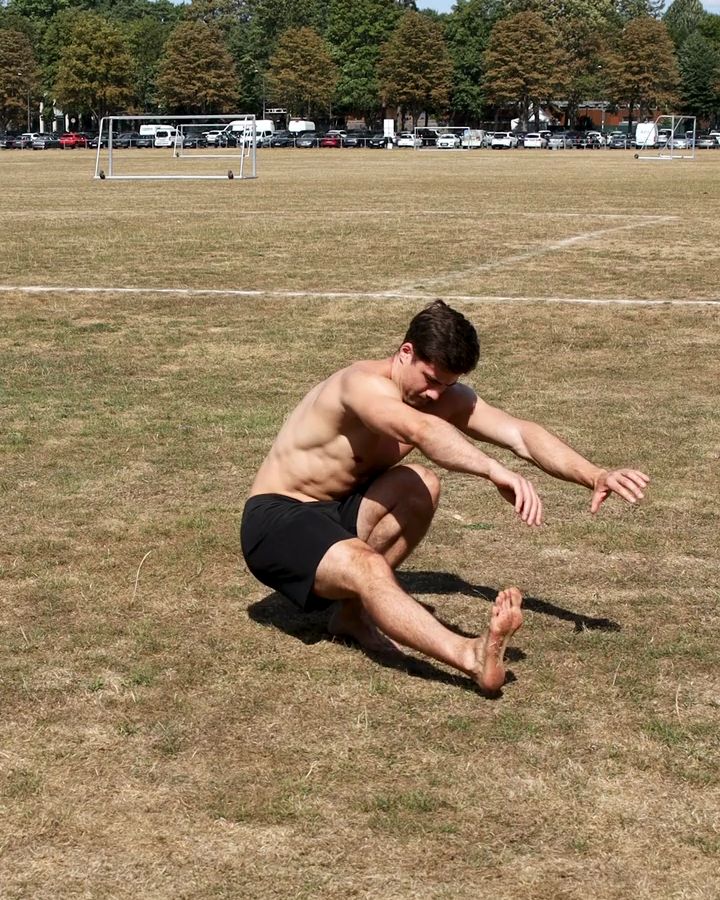
Negative Pistol Squats
In this variation, you focus on the slow, controlled downward movement while placing the load on the standing leg. The emphasis is on the eccentric phase, which optimally prepares the muscles for the full pistol squat. This method is particularly useful when you don't yet have the strength to perform the upward movement of the pistol squat with proper form.
Negative Pistol Squats - the correct execution
- Start in hip-width stance
- Shift your body weight to the left leg
- Stretch the right leg forward
- Bend your left knee
- Shift your body weight forward
- Go as low as possible
- In the deepest position put your right leg back on the floor and come back to the starting position
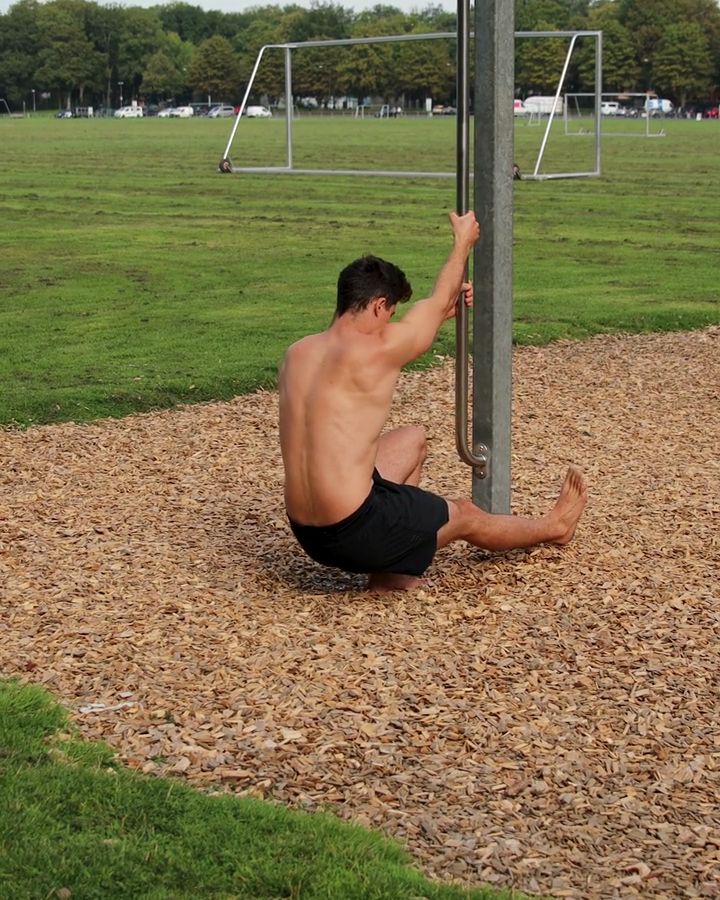
Assisted Pistol Squats
In the assisted pistol squat, you use an object like a pole to stabilize your balance and reduce the load. This exercise is primarily used to learn the movement pattern, allowing you to refine your technique while simultaneously building strength and mobility.
Necessary equipment
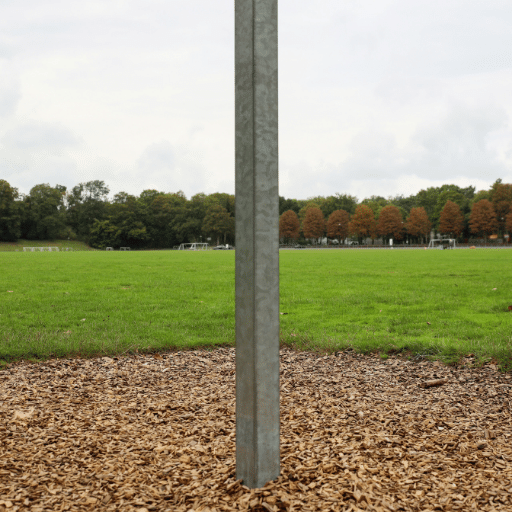
Assisted Pistol Squats - the correct execution
- Stand upright with your feet hip-width apart directly in front of a post
- Shift your weight to your left leg and lift your right leg off the ground
- Grab the post with your hands to support yourself during the movement
- Bend your left knee and bring your glute as close to the ground as possible
- Your heel should stay on the ground throughout
- Extend your right leg forward so that the foot does not touch the ground
- Keep your chest upright and your back as straight as possible
- Make sure that you tend to push your bent knee outwards to stabilize it
- Powerfully push yourself up with your left leg back to the standing position
- Use your hands as much as necessary and as little as possible for support
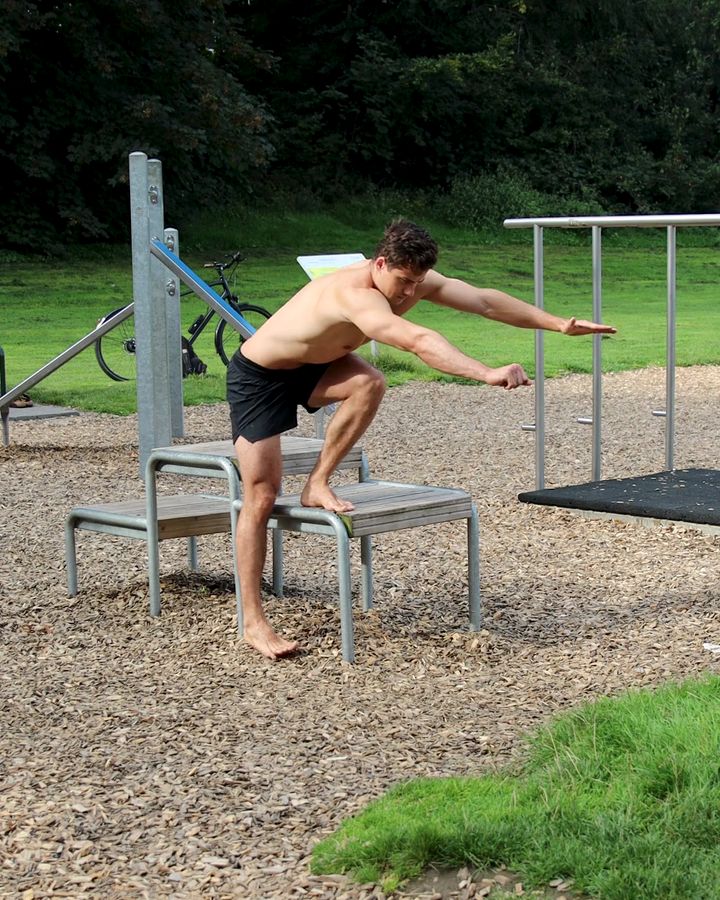
Easy Pistol Squats
The simplified pistol squat, also known as the heel touch, is used similarly to the elevated pistol squat to reduce the demands of the classic version. In this variation, the heel of the free leg touches the ground, which reduces the flexibility requirements for the hip compared to the classic pistol squat.
Necessary equipment
Easy Pistol Squats - the correct execution
- Stand upright with your left foot on the edge of a box
- The right leg hovers in the air
- Keep your arms in front of you to help balance and shift your body's center of gravity forward
- Bend your left knee and bring your right heel to the floor
- Pull the toes of the right foot up so that you can not jump off the floor
- Your left heel should remain on the ground throughout
- Keep your chest upright and your back as straight as possible
- Make sure you tend to push your bent knee outward to stabilize it
- Powerfully push yourself back up with your left leg to the standing position
Similar exercises to Pistol Squats
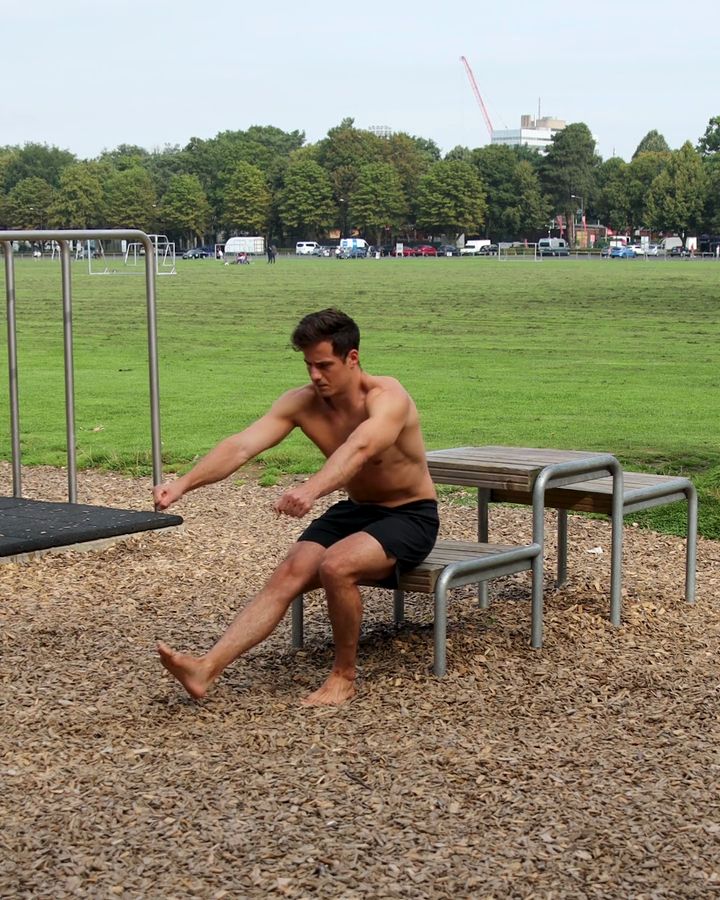
Pistol Squat To Box
Pistol Squats to Box, or Sit Downs, are a progression exercise of the Pistol Squat, aimed at strengthening the leg muscles, especially the quadriceps and glutes. In this exercise, a one-legged squat is performed in front of a box or bench, allowing you to sit down at mid-height. The raised surface reduces the range of motion, making the exercise easier for beginners.
Other progression exercises for the Pistol Squat with similar intensity include Assisted One-Legged Squats and Negative One-Legged Squats.
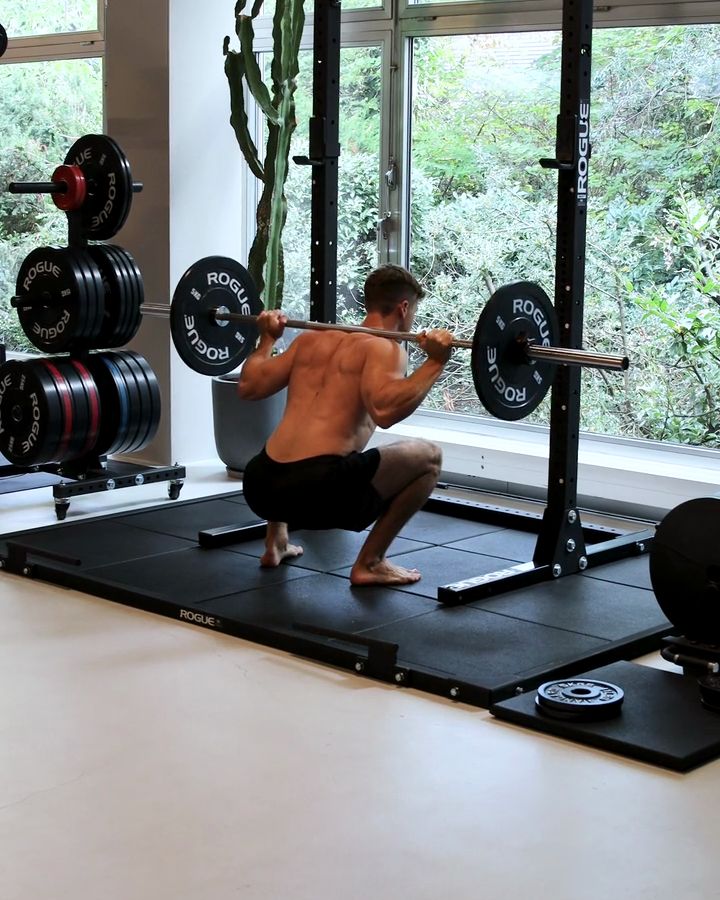
Barbell Back Squats
Back squats are one of the fundamental exercises in strength training. They are typically performed with a barbell, allowing for progressive overload. Back squats primarily target the thigh muscles, particularly the quadriceps and glutes. Additionally, they strengthen the core and lower back, as these muscles are crucial for stability and control during the exercise.
Back squats are among the most well-known foundational exercises in strength training, as they promote overall body strength and stability, improve functional movements in daily life, and, when combined with other strength exercises like deadlifts or lunges, provide an excellent foundation for leg training.
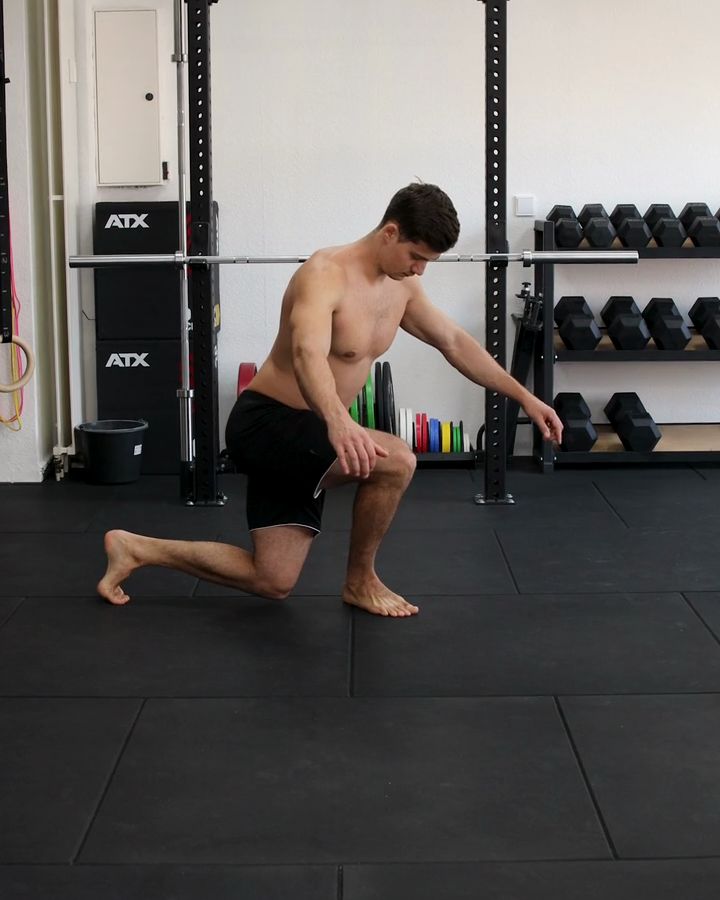
Curtsey Lunges
Curtsey lunges are a variation of the classic lunge, where the back leg is crossed behind the body. This movement particularly targets the outer thighs and glutes, especially the side glute muscles. The crossing motion also promotes knee joint stability and improves coordination. Compared to the normal lunge, curtsey lunges work the side muscle groups more intensively, making them an effective exercise for balanced leg training.
This could also be interesting
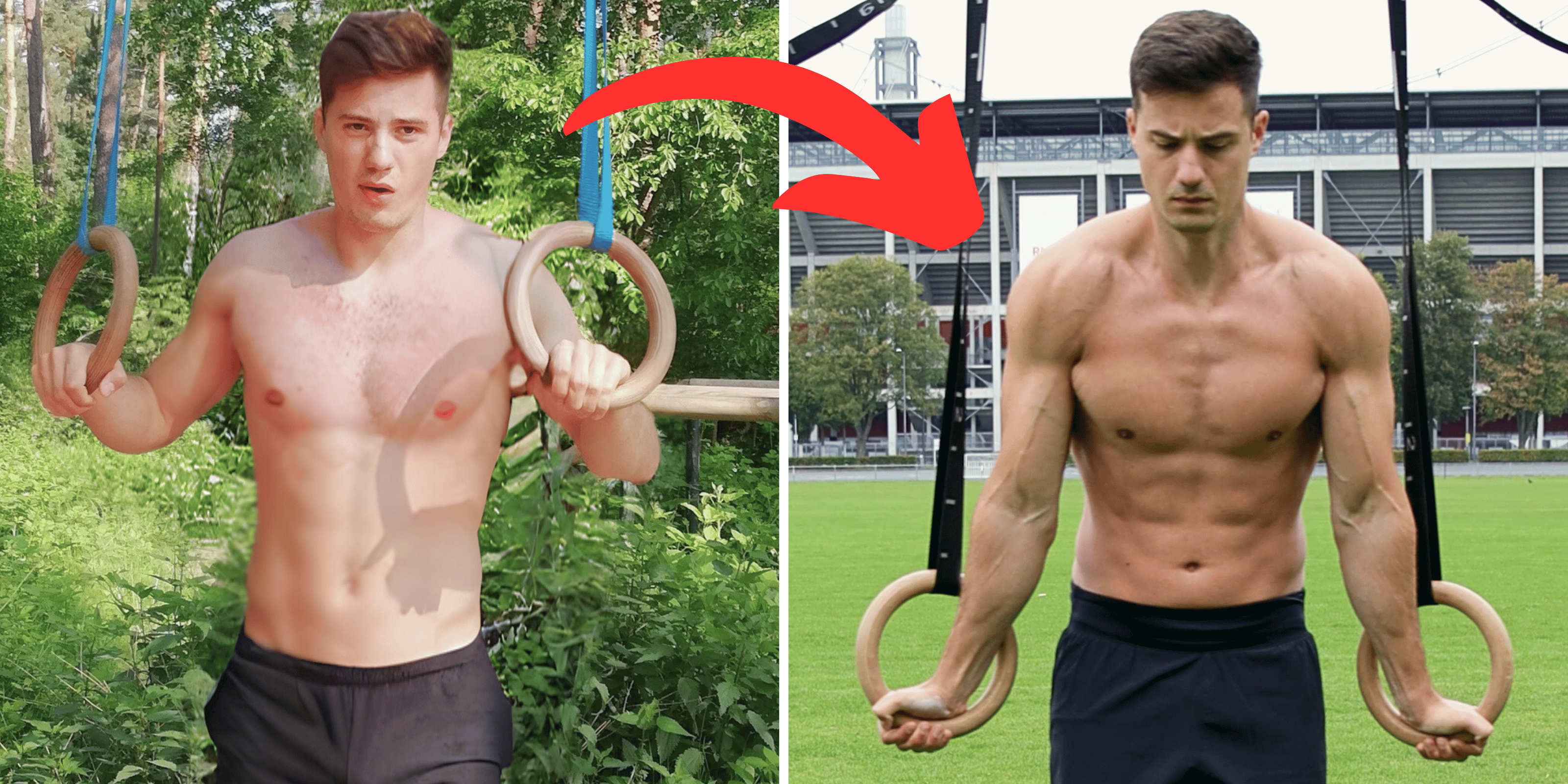
Calisthenics Body Transformation – How to Build a Strong, Lean, and Athletic Physique
Transform your body with Calisthenics! Build muscle, burn fat & achieve a shredded physique with bodyweight training. See real before & after results!
Complete Calisthenics Skills List – 40+ Exercises from Beginner to Pro
Which calisthenics skills should you learn first? And which ones will really help you progress? In this article, you’ll find a complete list of over 40 exercises – from the very basics to the toughest moves for professionals. Each exercise comes with instructions, so you can immediately integrate them into your training.
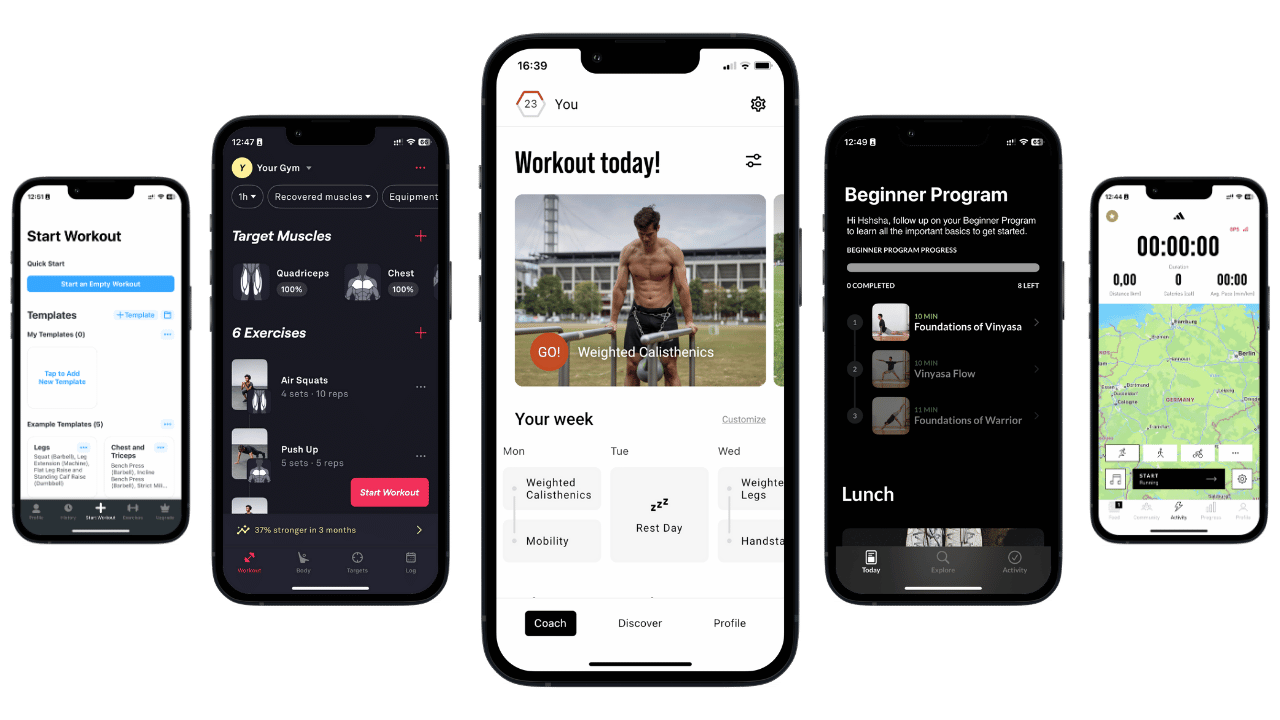
The Best Fitness Apps in 2025: Our Top 10 Recommendations
Don’t miss the best fitness apps of 2025: surprising favorites, free options, and perfect tools for your workouts. Find the ideal app today!