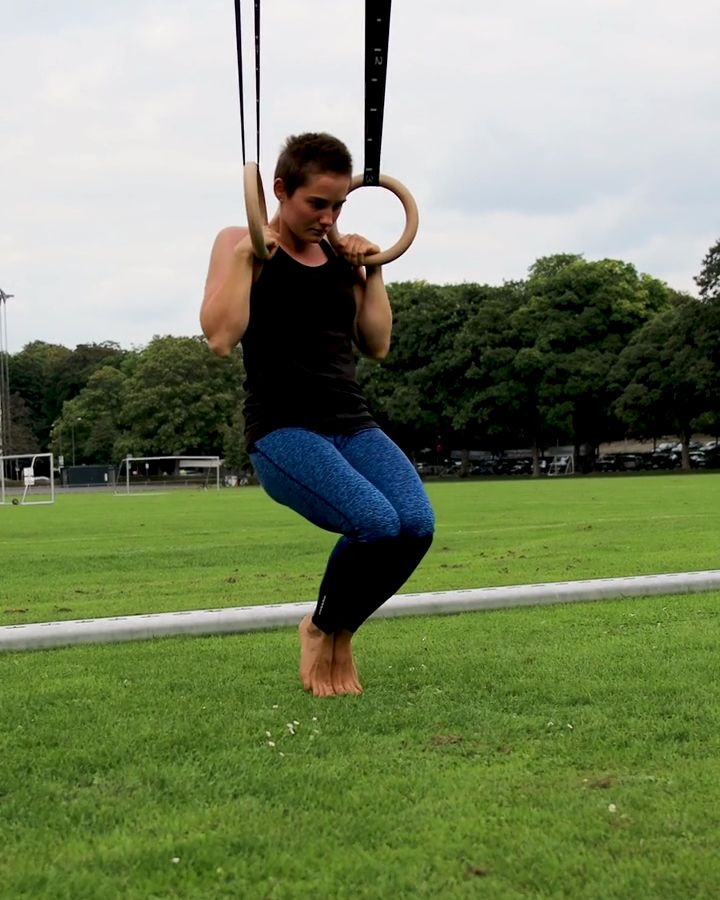
Negative Ring Muscle Ups
Negative ring muscle-ups focus on the eccentric part of the classic ring muscle-up. By taking advantage of the fact that we’re stronger during the lowering phase than the pull-up, this movement can be practiced even before achieving a full muscle-up. The exercise allows targeted training of the negative phase, building strength and helping to learn the complex movement sequence. It strengthens the back, shoulders, and arms and is an excellent precursor to the full ring muscle-up. Compared to negative ring dips, this exercise incorporates the transition, which particularly challenges shoulder mobility and strength.
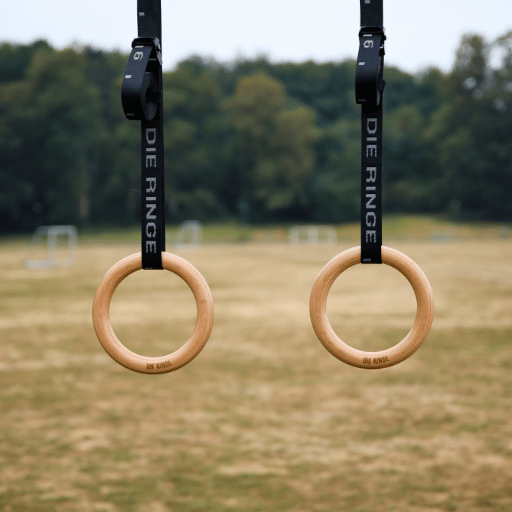
Necessary equipment
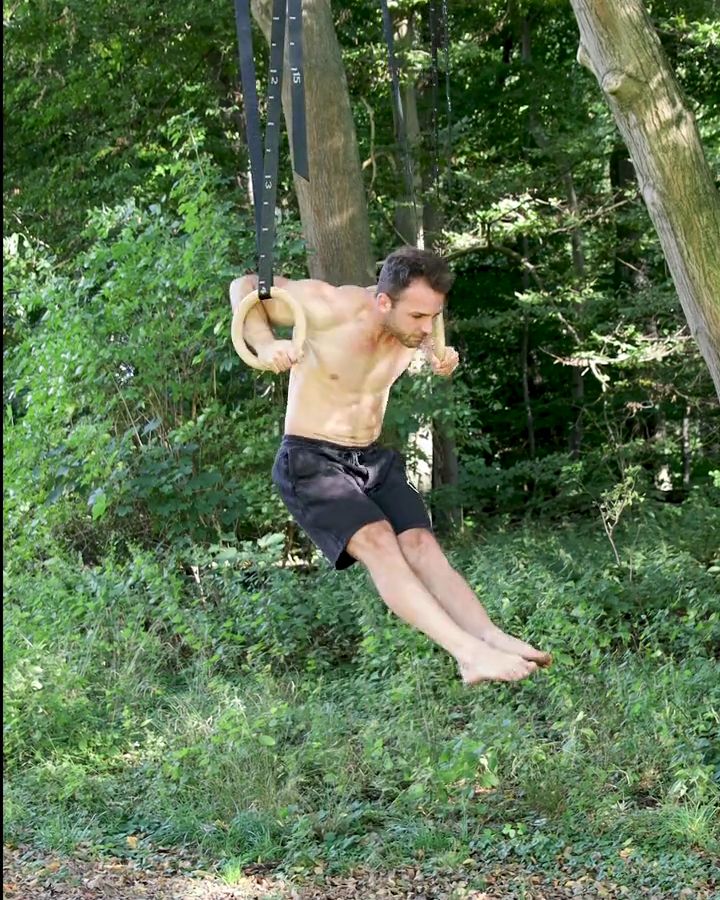
Negative Ring Muscle Ups - the correct execution
- Grab the rings in a false grip
- Start in a seated position
- Bend your arms and pull the rings up to your chest
- Minimize leg assistance during the transition
- Push yourself up into the support position while lifting your feet off the ground
- Pause briefly in the support position for control
- Bend your arms and slowly lower yourself into a deep dip position
- Complete the transition on the way down without leg support
- Work slowly and controlled
- Maintain tension throughout your body, especially in the core, to ensure stability
- The goal should be to pause at any point during the negative phase, i.e., while lowering
- Focus on smooth movements and avoid abrupt motions
The exercise Negative Ring Muscle Ups is intended to be used as a technique exercise.
Which muscles are trained by Negative Ring Muscle Ups?


Primary trained muscles for Negative Ring Muscle Ups
Latissimus - The latissimus dorsi is a large muscle in your back that helps you pull your arm down and back. It also supports breathing and stabilizes the spine.
Front Delts - The front part of the deltoid muscle, also known as the anterior shoulder, is located at the front of the shoulder. It is primarily involved in the forward movement of the arm, such as lifting the arm forward. It also assists in the internal rotation of the arm. This muscle is engaged in activities that involve lifting objects in front of the body or pushing forward.
Chest - The pectoralis major muscle is the large muscle on your chest. It helps you bring your arm towards your body and rotate it inward.
Upper Back - The muscles in the upper back, including the trapezius and rhomboid muscles, help move and stabilize your shoulders. They pull the shoulder blades together and support posture.
Secondary trained muscles for Negative Ring Muscle Ups
Triceps - The triceps brachii muscle is located at the back of your upper arm. It extends your arm at the elbow and also helps move the arm backward.
Forearm - The forearm muscles are divided into flexors and extensors. The flexors bend your wrist, while the extensors straighten it.
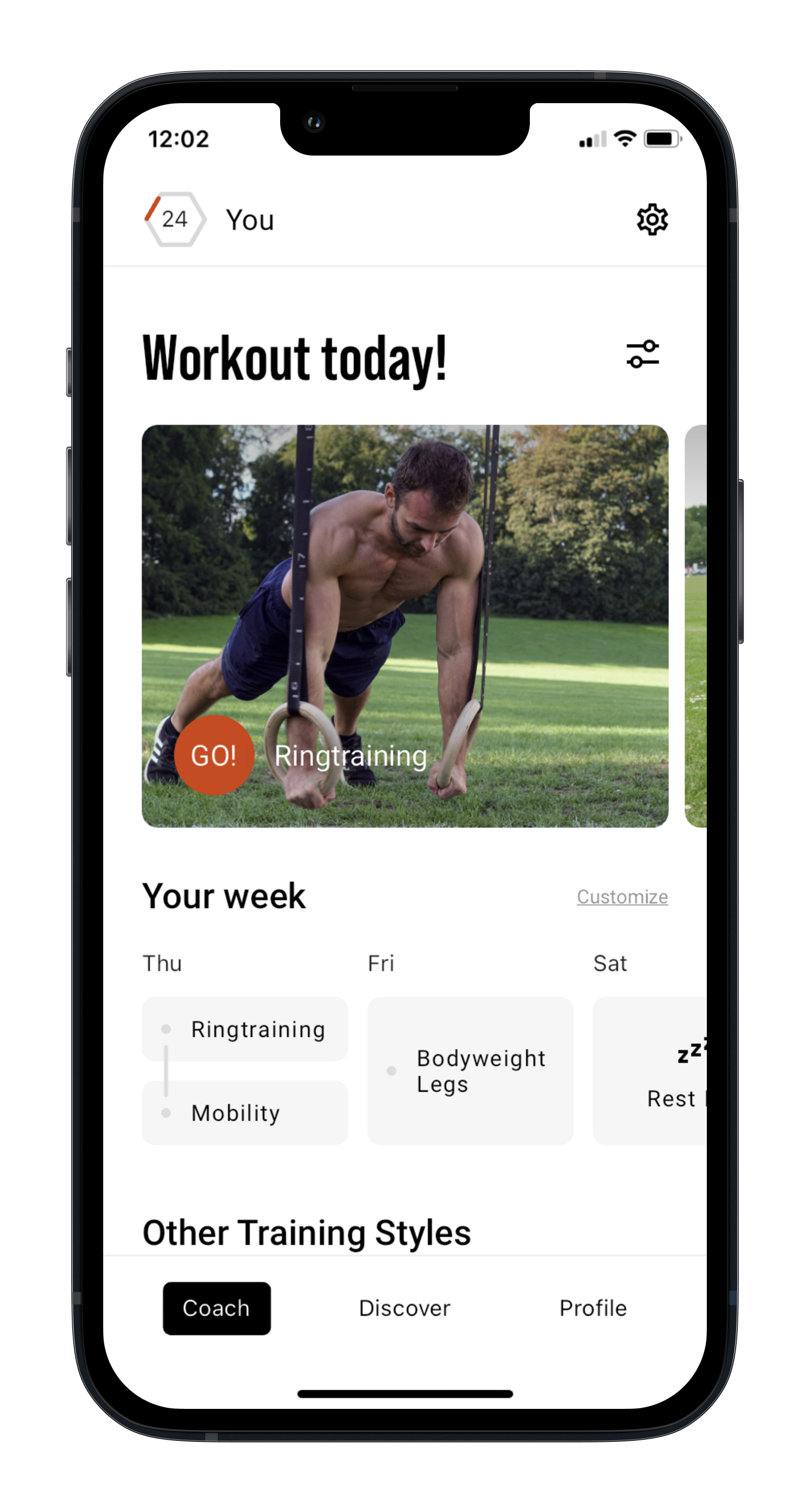
Calisthenics training, developed by sports scientists and optimized by smart algorithms, for your best workout.
Over 1000 five-star reviews on App Store and Google Play.


This could also be interesting
Calisthenics Body Transformation – How to Build a Strong, Lean, and Athletic Physique
Transform your body with Calisthenics! Build muscle, burn fat & achieve a shredded physique with bodyweight training. See real before & after results!
Complete Calisthenics Skills List – 40+ Exercises from Beginner to Pro
Which calisthenics skills should you learn first? And which ones will really help you progress? In this article, you’ll find a complete list of over 40 exercises – from the very basics to the toughest moves for professionals. Each exercise comes with instructions, so you can immediately integrate them into your training.
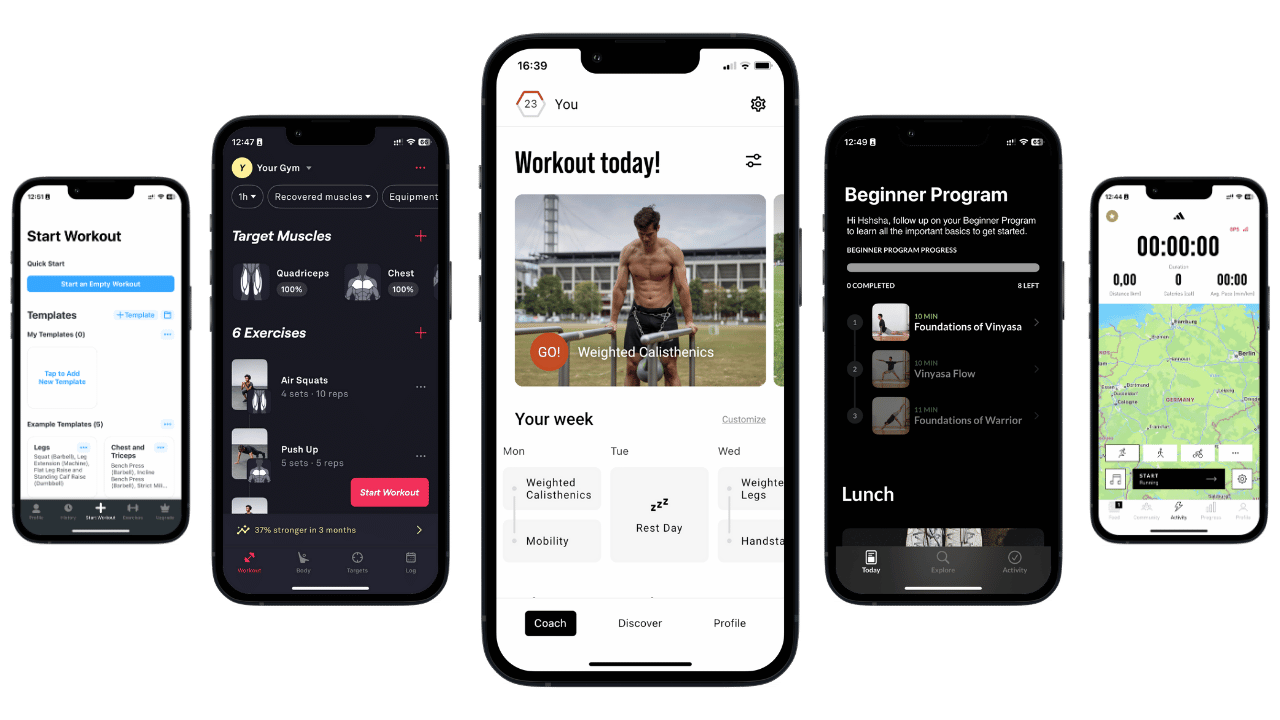
The Best Fitness Apps in 2025: Our Top 10 Recommendations
Don’t miss the best fitness apps of 2025: surprising favorites, free options, and perfect tools for your workouts. Find the ideal app today!