Human Flag
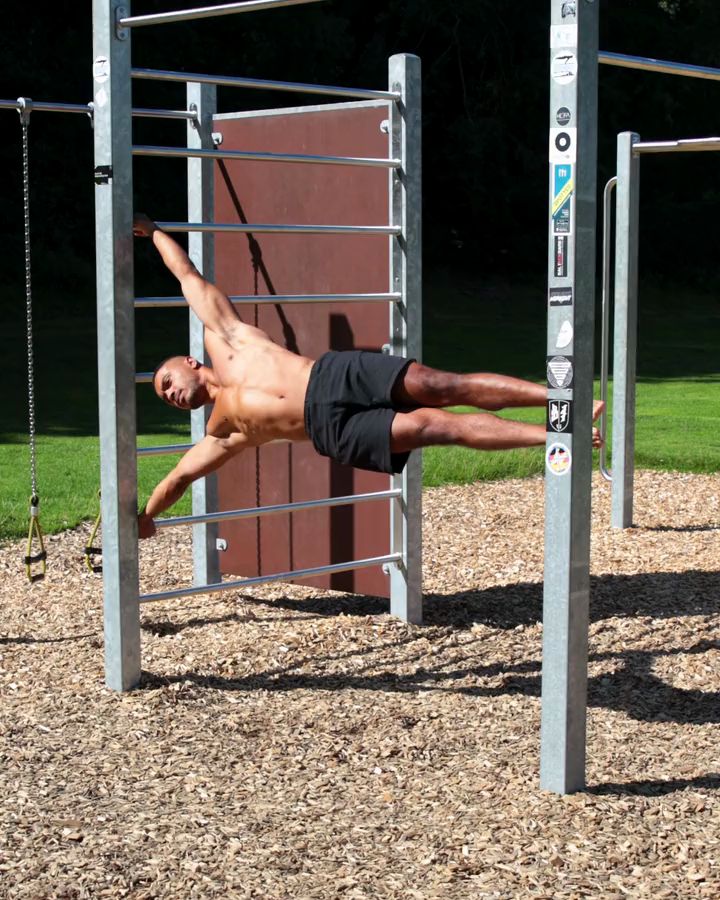
The Human Flag is a very challenging exercise from calisthenics, where you hold onto a pole sideways and stretch your body horizontally in the air. You need strong abdominal muscles, shoulders, and arms for this exercise. Your upper arm pulls the pole towards you while your lower arm pushes it away. Simultaneously, your abdominal and back muscles are tensed to keep your body stable. It requires a lot of strength and body control to perform this exercise against gravity.
Necessary equipment

Human Flag - the correct execution
- Stand sideways to the wall bars so that you can place both hands on different bars
- The distance between your hands should be about the length of your torso
- With the upper hand, grab a bar with the fingers pointing downward
- With the lower hand grab another bar with the fingers pointing upward
- Pull the lower shoulder blade towards your ear (elevation)
- Pull the upper shoulder blade down (depression)
- Tense your entire body while keeping your arms extended
- Raise your body by pulling with the upper hand and pushing with the lower hand
- Try to bring your body in a horizontal position
- Both legs should be extended and the body should form a straight line from the shoulders to the feet
- Direct your eyes forward while breathing calmly and evenly
The exercise Human Flag is intended to be used as a hypertrophy, technique exercise.
Which muscles are trained by Human Flag?


Primary trained muscles for Human Flag
Front Delts - The front part of the deltoid muscle, also known as the anterior shoulder, is located at the front of the shoulder. It is primarily involved in the forward movement of the arm, such as lifting the arm forward. It also assists in the internal rotation of the arm. This muscle is engaged in activities that involve lifting objects in front of the body or pushing forward.
Upper Back - The muscles in the upper back, including the trapezius and rhomboid muscles, help move and stabilize your shoulders. They pull the shoulder blades together and support posture.
Side Delts - The lateral part of the deltoid muscle, also known as the lateral shoulder, is located on the outside of the shoulder. It is the main muscle responsible for lifting the arm sideways. The lateral shoulder is particularly active when the arm is extended away from the body, such as during lateral raises or lifting objects to the side. It plays a key role in arm abduction and shoulder stabilization.
Secondary trained muscles for Human Flag
Triceps - The triceps brachii muscle is located at the back of your upper arm. It extends your arm at the elbow and also helps move the arm backward.
Biceps - The biceps brachii muscle is located on the front of your upper arm. It helps you bend your arm at the elbow, rotate your palm upwards, and lift your arm forward.
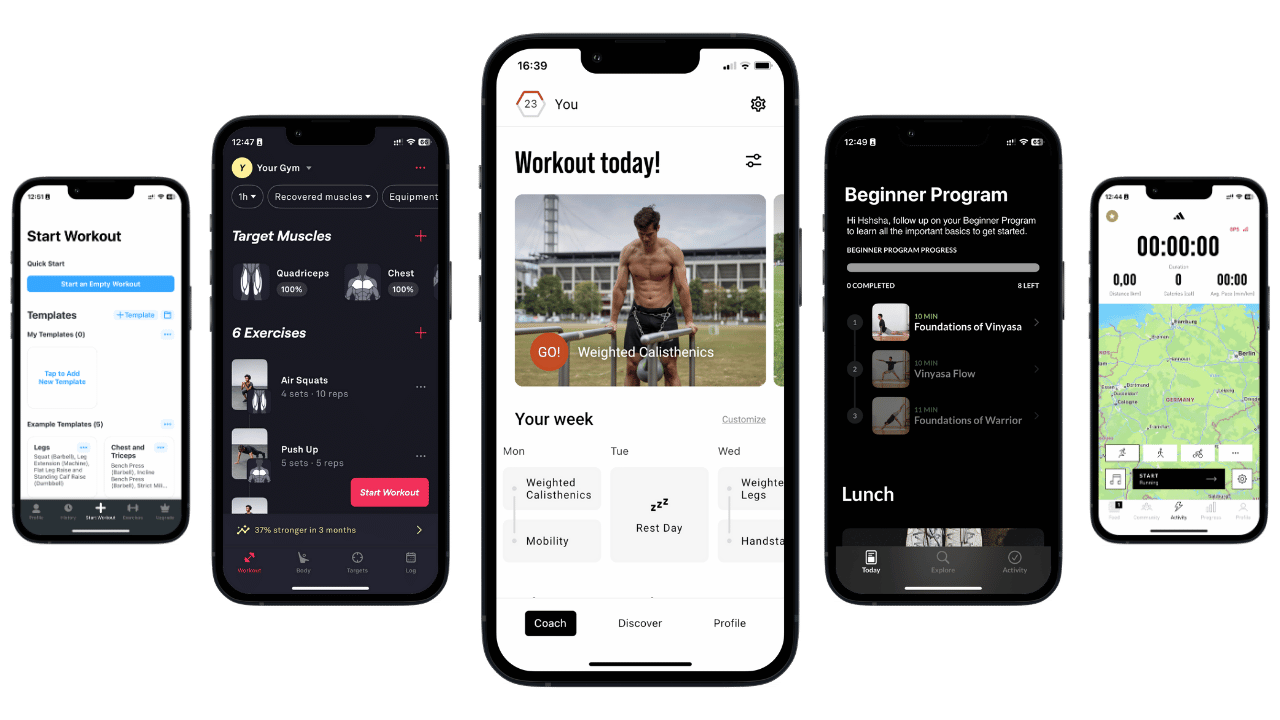
Calisthenics training, developed by sports scientists and optimized by smart algorithms, for your best workout.
Over 1000 five-star reviews on App Store and Google Play.


Alternative variants of Human Flag:
45 Degree Flag
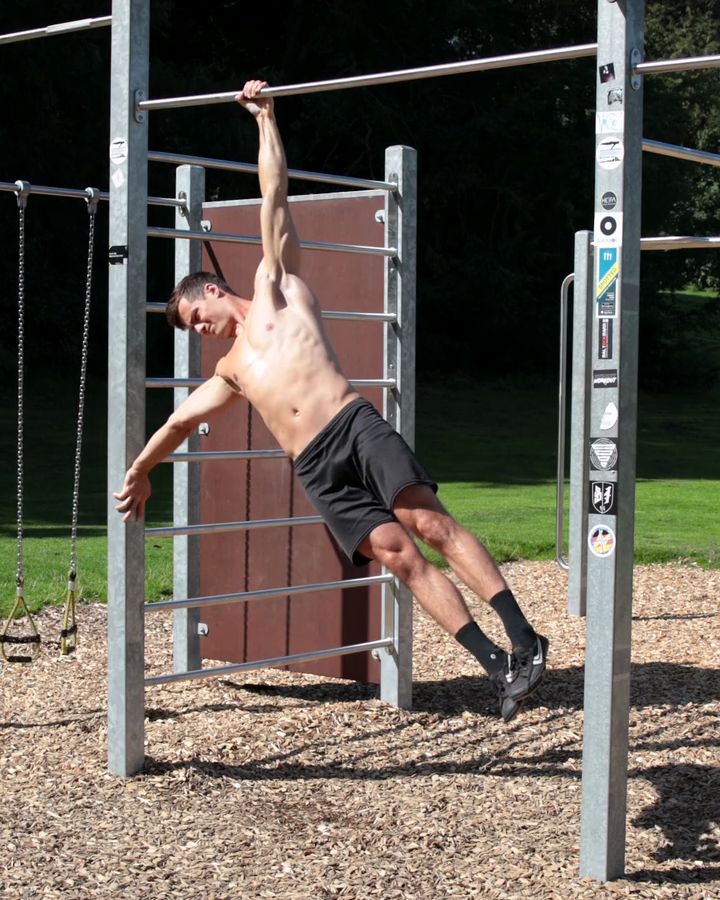
The 45-Degree Flag is an easier variation of the regular Human Flag, where the body is held at an angle of about 45 degrees to the horizontal instead of parallel to the ground. However, the 45-Degree Flag still requires considerable muscle strength, especially in the shoulders, arms, and core, as well as good body control and stability.
Necessary equipment

45 Degree Flag - the correct execution
- Start hanging from a pull-up bar
- Release one hand and grab the post / wall
- Your arm torso angle of the supporting arm should be open about 90 degrees
- Push your body in a straight line to the side and keep tension in the core and glute
- Push away until you are at about a 45 degree incline to the floor
- Your upper body and eyes point to the side
- Arms remain extended throughout
Straddle Human Flag
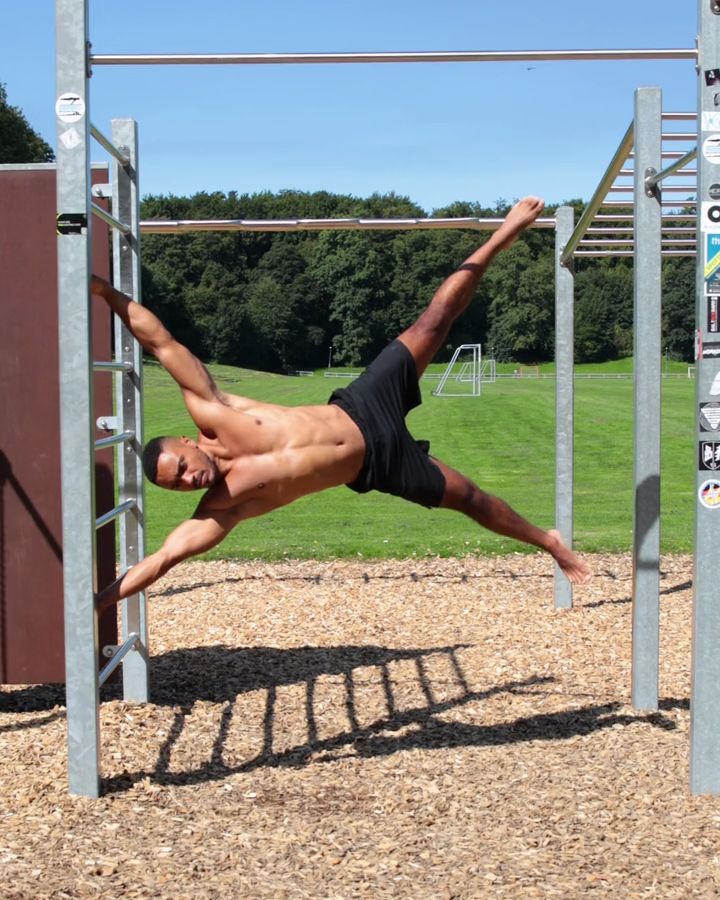
The Straddle Human Flag is somewhat easier compared to the regular Human Flag because spreading the legs brings the body's center of gravity closer to the hands.
Necessary equipment
Straddle Human Flag - the correct execution
- Stand sideways to the wall bars so that you can place both hands on different bars
- The distance between your hands should be about the length of your torso
- With the upper hand, grab a bar with the fingers pointing downward
- With the lower hand grab another bar with the fingers pointing upward
- Pull the lower shoulder blade towards your ear (elevation)
- Pull the upper shoulder blade down (depression)
- Tense your entire body while keeping your arms extended
- Raise your body by pulling with the upper hand and pushing with the lower hand
- Try to bring your body in a horizontal position
- Spread your legs to shorten your body length and thus your leverage
- Keep your body in a straight line from shoulders to hips
- Direct your eyes forward while breathing calmly and evenly
Low Flag
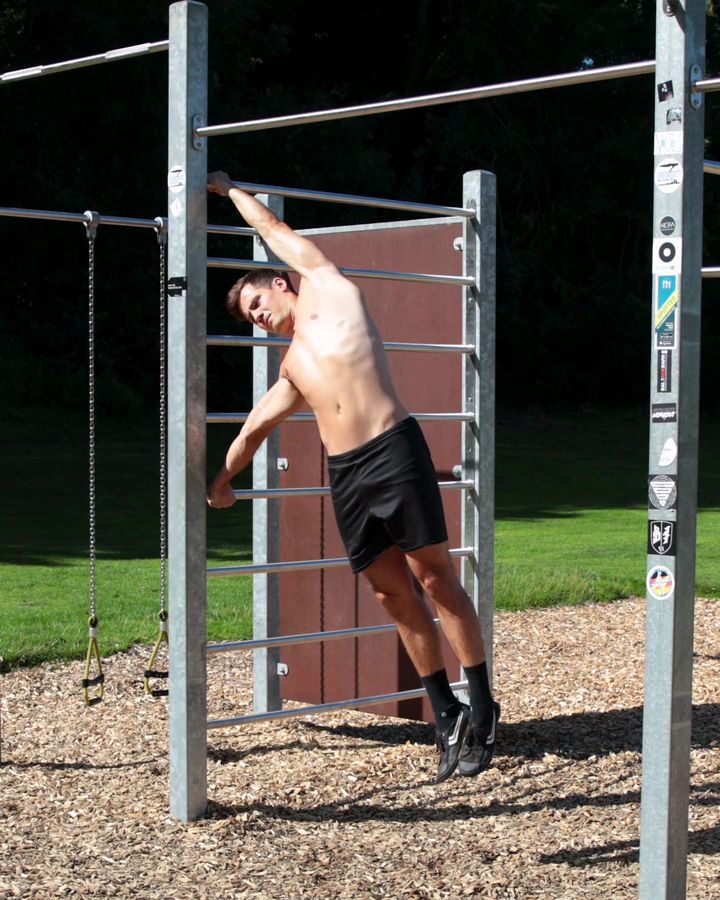
The Low Flag Position is often considered less demanding than the regular Human Flag because it requires less body tension and balance. The angled position reduces the lever arm acting on the shoulders and core, making it somewhat easier to hold the position.
Necessary equipment
Low Flag - the correct execution
- Stand sideways to the wall bars so that you can place both hands on different bars
- Climb up 1-2 bars if necessary to be able to hang freely with the legs
- The distance between your hands should be about the length of your torso
- With the upper hand, grab a bar with the fingers pointing downward
- With the lower hand grab another bar with the fingers pointing upward
- Pull the lower shoulder blade towards your ear (elevation)
- Pull the upper shoulder blade down (depression)
- Release the feet from the floor and let your lower body hang towards the floor
- Tense your whole body while keeping your arms extended
- Your upper body and your eyes point to the side
Flag Plank
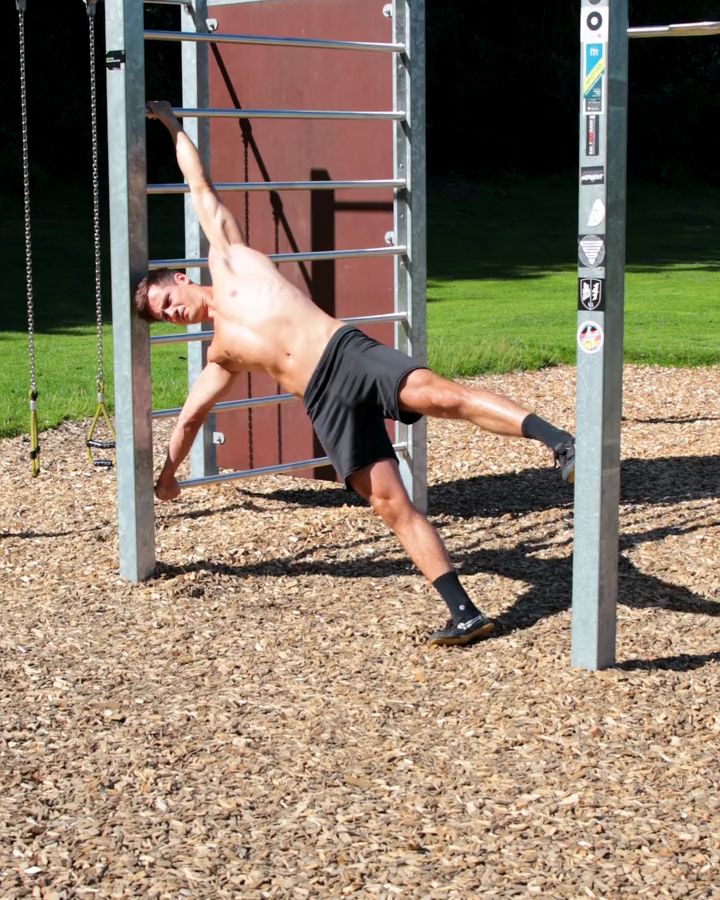
The Flag Plank helps improve your core stability and shoulder strength. It is also a good exercise for preparing for the Human Flag.
Necessary equipment
Flag Plank - the correct execution
- Stand sideways to the wall bars so that you can place both hands on different bars
- The distance between your hands should be about the length of your torso
- With the upper hand, grab a bar with the fingers pointing downward
- With the lower hand grab another bar with the fingers pointing upward
- Pull the lower shoulder blade towards your ear (elevation)
- Pull the upper shoulder blade down (depression)
- Place the lower leg on the floor as far away from the wall bars as possible
- Keep the upper leg in the air in extension of the upper body
- Tense your whole body while keeping your arms extended
This could also be interesting
Calisthenics Body Transformation – How to Build a Strong, Lean, and Athletic Physique
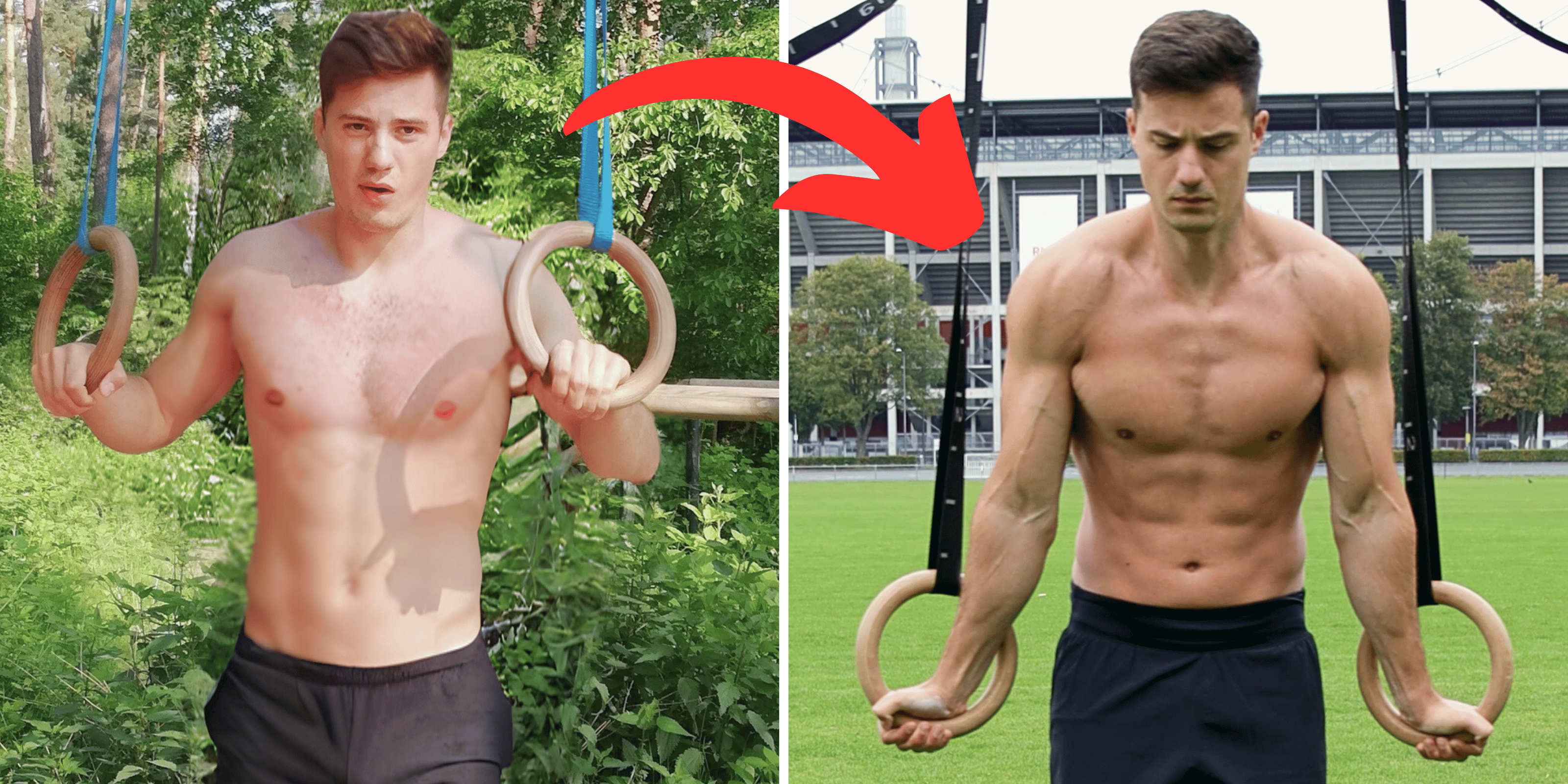
Transform your body with Calisthenics! Build muscle, burn fat & achieve a shredded physique with bodyweight training. See real before & after results!
Complete Calisthenics Skills List – 40+ Exercises from Beginner to Pro
Which calisthenics skills should you learn first? And which ones will really help you progress? In this article, you’ll find a complete list of over 40 exercises – from the very basics to the toughest moves for professionals. Each exercise comes with instructions, so you can immediately integrate them into your training.
The Best Fitness Apps in 2025: Our Top 10 Recommendations
Don’t miss the best fitness apps of 2025: surprising favorites, free options, and perfect tools for your workouts. Find the ideal app today!