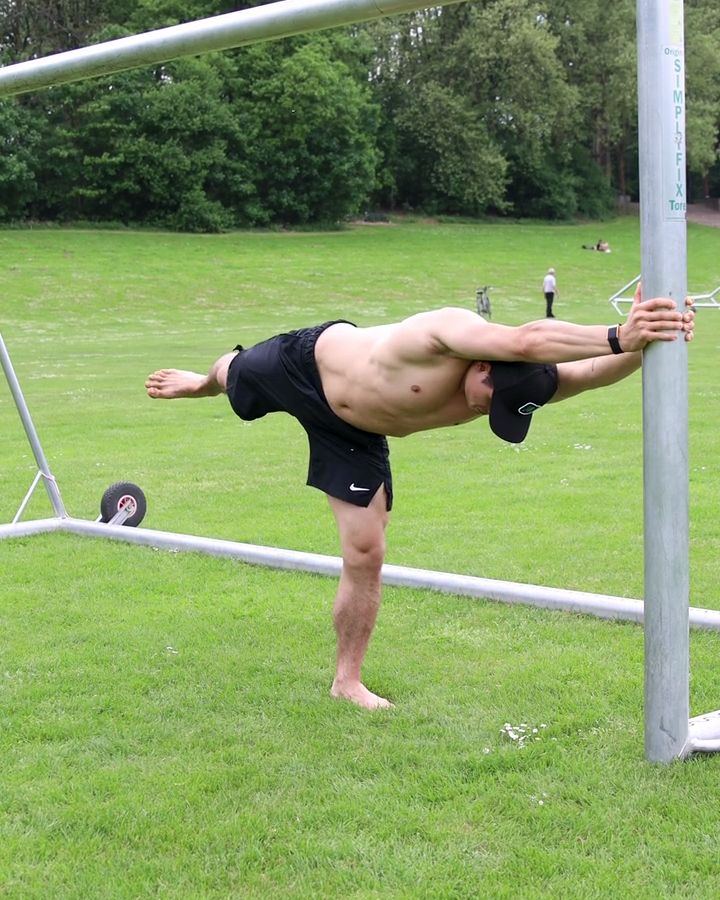
Hip Airplane
The Hip Airplane is an effective exercise to improve mobility and stability in the hips. It especially helps with symmetry in hip rotation, which is important for avoiding imbalances during strength training. The exercise can be adjusted as needed: to enhance mobility, lower the pelvis to promote internal hip rotation; for stability, work on controlling the single-leg stance. The Hip Airplane can be used as preparation for squats or deadlifts or as active recovery on rest days. Thanks to the rotational plane, the exercise targets muscle groups that are often neglected in traditional strength exercises.
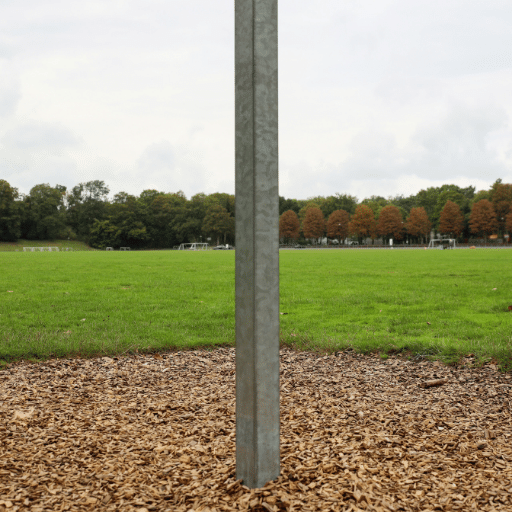
Necessary equipment
Hip Airplane - the correct execution
- Hold on to a post with both hands and arms outstretched
- Your right leg is extended and at right angles to your torso on the floor
- Extend your left leg to the back
- The leg forms a straight line with your body
- Keep tension in your torso and buttocks
- Turn your left hip up and rotate your leg outwards
- Rotate your upper body up as well
- Your gaze remains directed to the floor throughout
- Work in your largest possible range of motion
The exercise Hip Airplane is intended to be used as a mobility, warm up exercise.
Which muscles are trained by Hip Airplane?


Primary trained muscles for Hip Airplane
Hamstrings - The hamstrings are muscle groups located at the back of your thigh. They help you bend your knee and extend your hip.
Lower Back - The erector spinae muscle runs along your spine and helps you extend your back and stand upright.
Glutes - The gluteus maximus is the large muscle in your buttocks. It is important for extending the hip, moving your leg backward, and stabilizing the hip joint.
Secondary trained muscles for Hip Airplane
Quadriceps - The quadriceps femoris is the large muscle at the front of your thigh. It extends your knee.
Calisthenics training, developed by sports scientists and optimized by smart algorithms, for your best workout.
Over 1000 five-star reviews on App Store and Google Play.


Alternative variants of Hip Airplane:
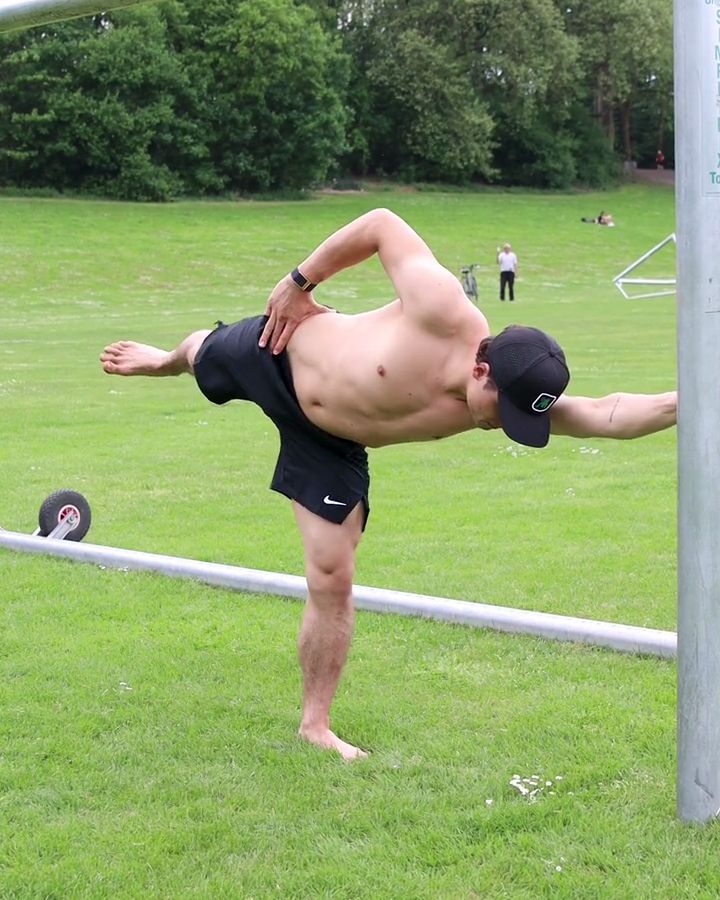
Hip Airplane with one arm on the hip
The Hip Airplane with one arm on the hip offers a slightly more challenging variation of the classic Hip Airplane. The balance aspect is increased a bit while still working on hip mobility and control. This variation is ideal for advanced athletes who have no issues with balance during the exercise and want to focus more on a large range of motion.
Necessary equipment
Hip Airplane with one arm on the hip - the correct execution
- Hold on to a post with your right hand and outstretched arms
- Your right leg is extended and at right angles to your torso on the floor
- Extend your left leg backward
- The leg forms a straight line with your body
- Keep tension in your torso and buttocks
- Turn your left hip up and rotate your leg outwards
- Rotate your upper body up as well
- Your gaze remains directed to the floor throughout
- Work in your largest possible range of motion
This could also be interesting
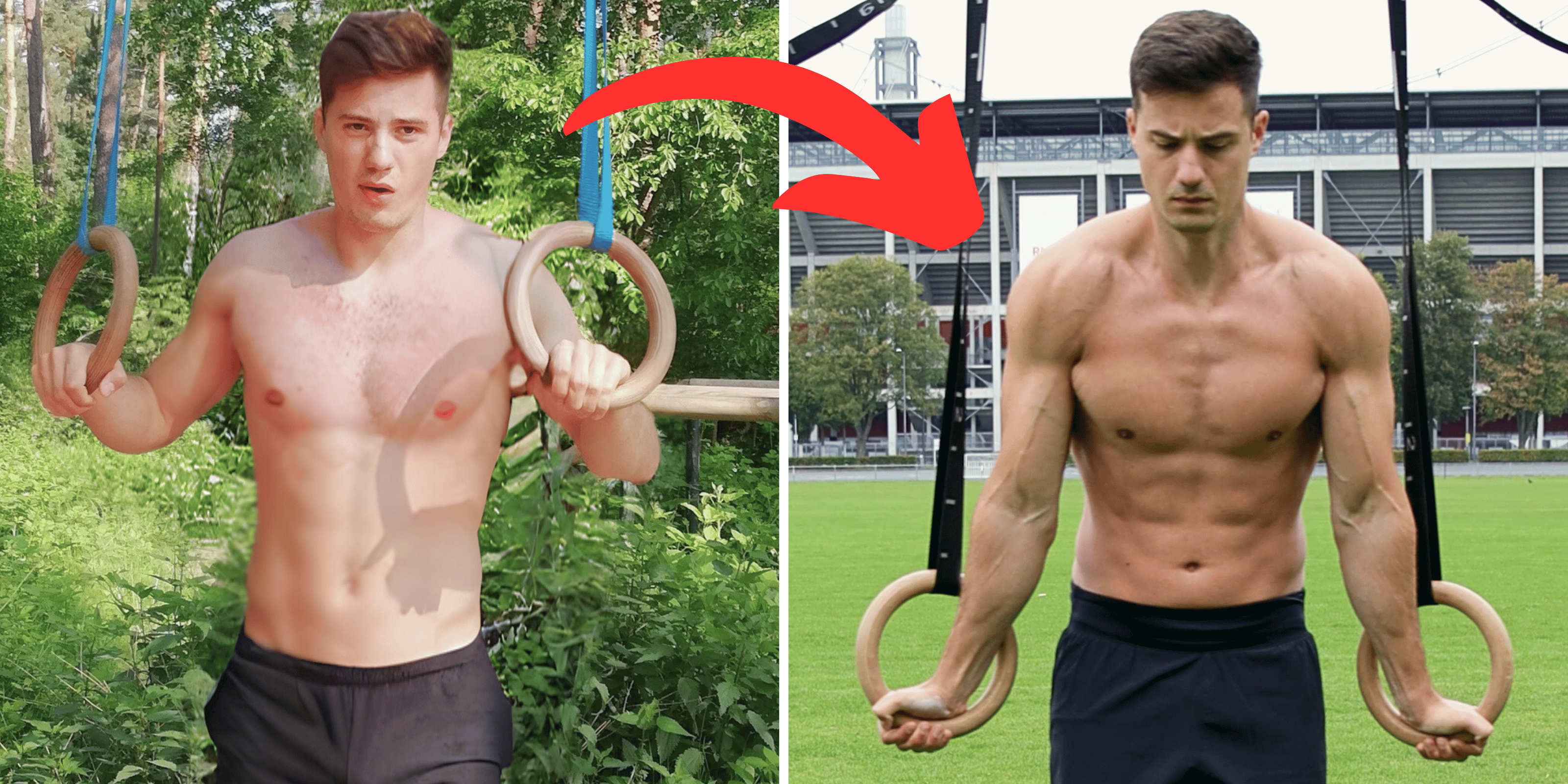
Calisthenics Body Transformation – How to Build a Strong, Lean, and Athletic Physique
Transform your body with Calisthenics! Build muscle, burn fat & achieve a shredded physique with bodyweight training. See real before & after results!
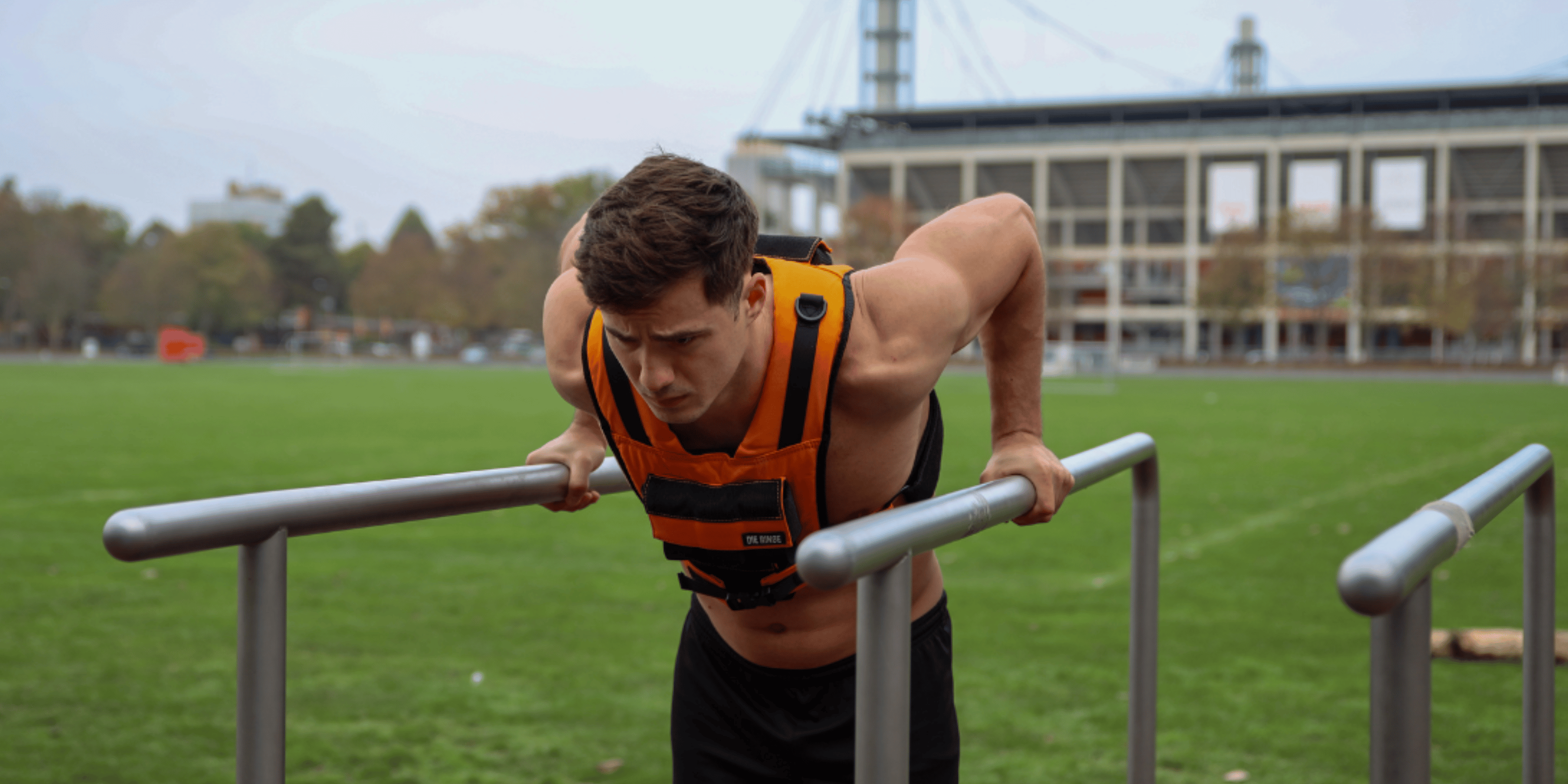
Complete Calisthenics Skills List – 40+ Exercises from Beginner to Pro
Which calisthenics skills should you learn first? And which ones will really help you progress? In this article, you’ll find a complete list of over 40 exercises – from the very basics to the toughest moves for professionals. Each exercise comes with instructions, so you can immediately integrate them into your training.
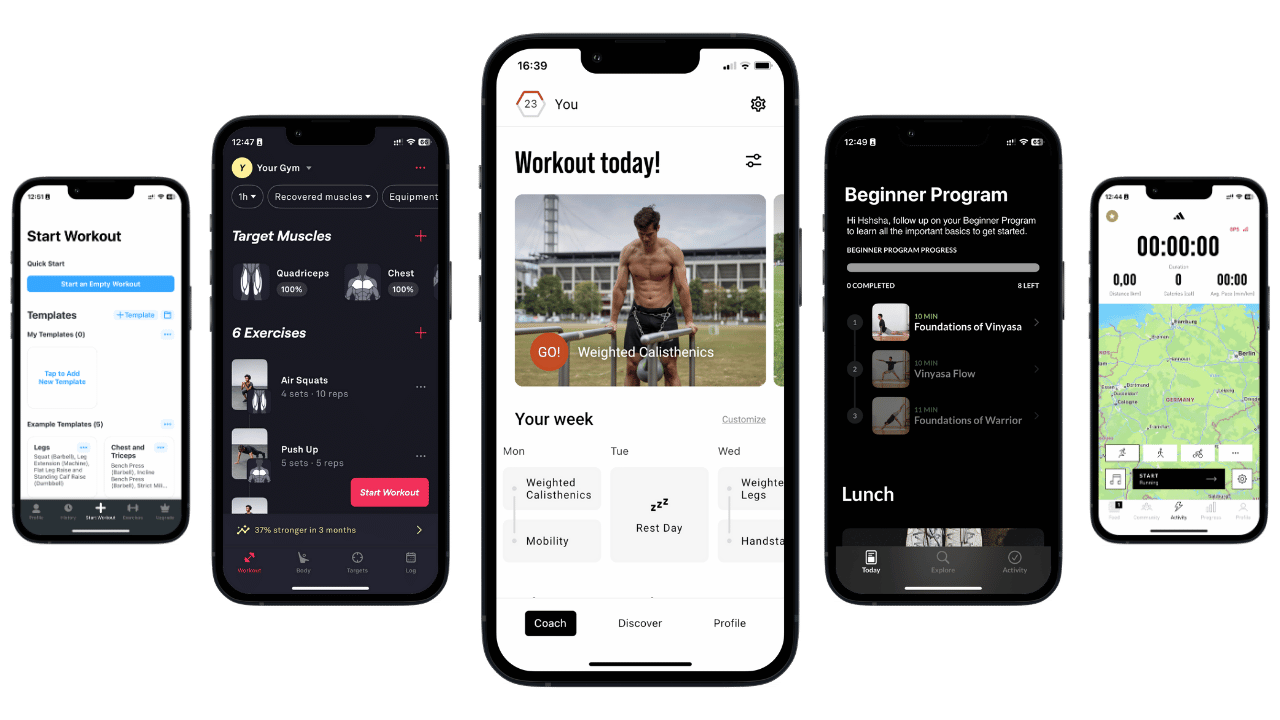
The Best Fitness Apps in 2025: Our Top 10 Recommendations
Don’t miss the best fitness apps of 2025: surprising favorites, free options, and perfect tools for your workouts. Find the ideal app today!