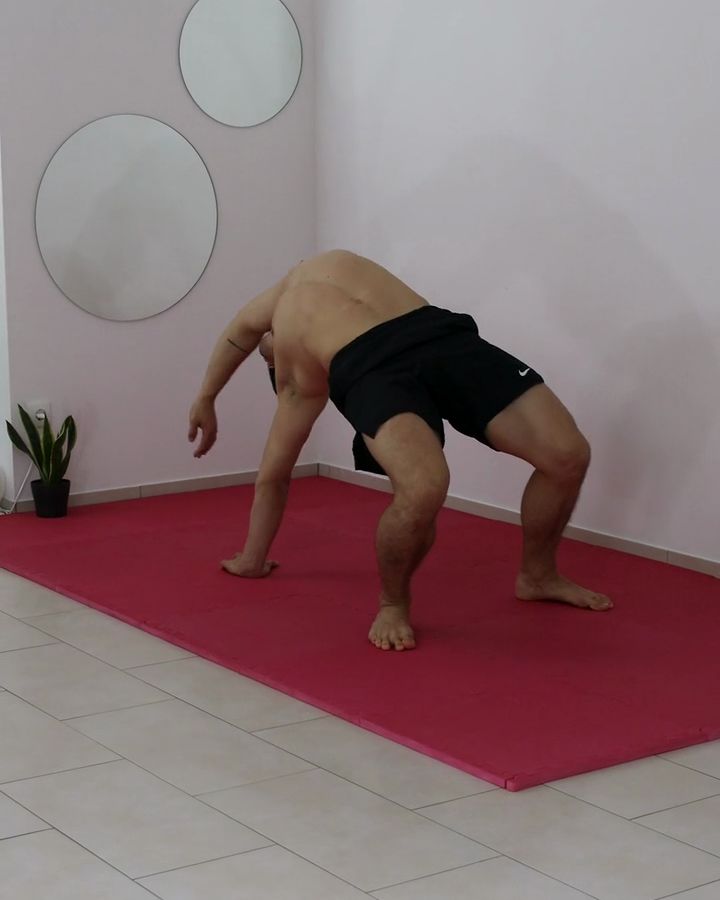
Bridge Rotations
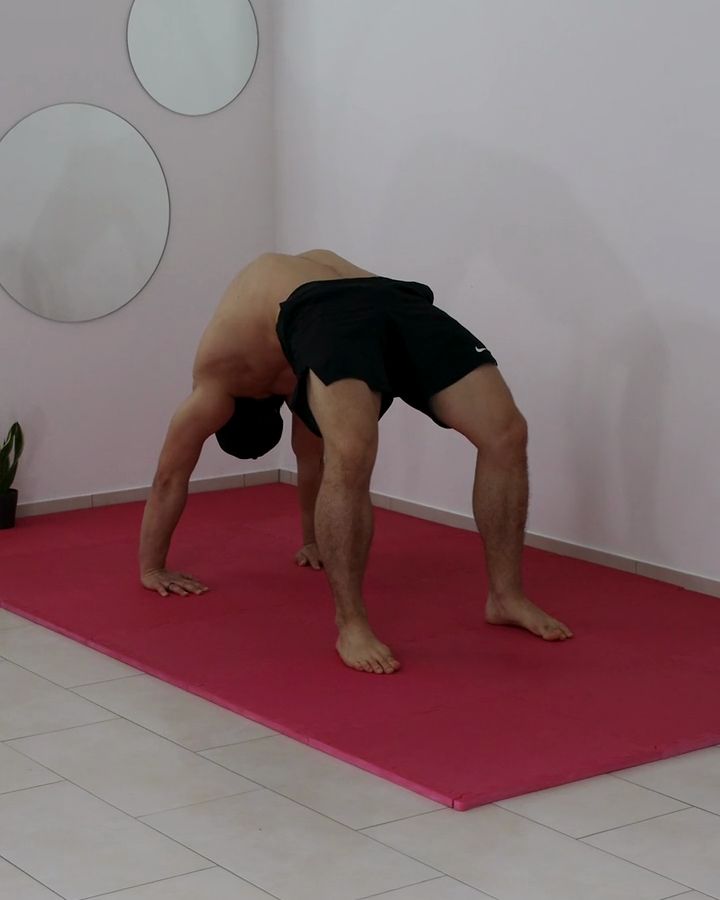
The bridge rotation combines the classic bridge with a dynamic rotational movement to enhance both flexibility and strength throughout the upper body. This exercise intensely engages the back muscles, shoulders, and core. Unlike the static bridge, the rotation allows for active stretching and mobilization of the spine, improving coordination. The bridge rotation can be seen as a progression from the half bridge rotation, which serves as an easier entry point and helps train controlled movement execution.
Bridge Rotations - the correct execution
- Start in a sitting position
- Lean on your hands behind your back
- Turn over the side into the bridge
- Rest your free hand on the floor
- Then release the other hand from the floor and dissolve the bridge over the other side
- Keep your feet on the floor
- Once in the starting position, start the next repetition in the opposite direction
The exercise Bridge Rotations is intended to be used as a mobility exercise.
Which muscles are trained by Bridge Rotations?


Primary trained muscles for Bridge Rotations
Rear Delts - The rear part of the deltoid muscle, also known as the posterior shoulder, is located at the back of the shoulder. It is responsible for the backward movement of the arm as well as external rotation. This muscle is particularly engaged during activities like rowing or pulling the arm back. The rear shoulder supports posture and helps pull the shoulder blades back, contributing to shoulder stabilization.
Hipflexors - The hip flexors, including the iliacus and psoas major muscles, allow you to bend your leg and torso forward.
Secondary trained muscles for Bridge Rotations
Quadriceps - The quadriceps femoris is the large muscle at the front of your thigh. It extends your knee.
Upper Back - The muscles in the upper back, including the trapezius and rhomboid muscles, help move and stabilize your shoulders. They pull the shoulder blades together and support posture.
Calisthenics training, developed by sports scientists and optimized by smart algorithms, for your best workout.
Over 1000 five-star reviews on App Store and Google Play.


Alternative variants of Bridge Rotations:
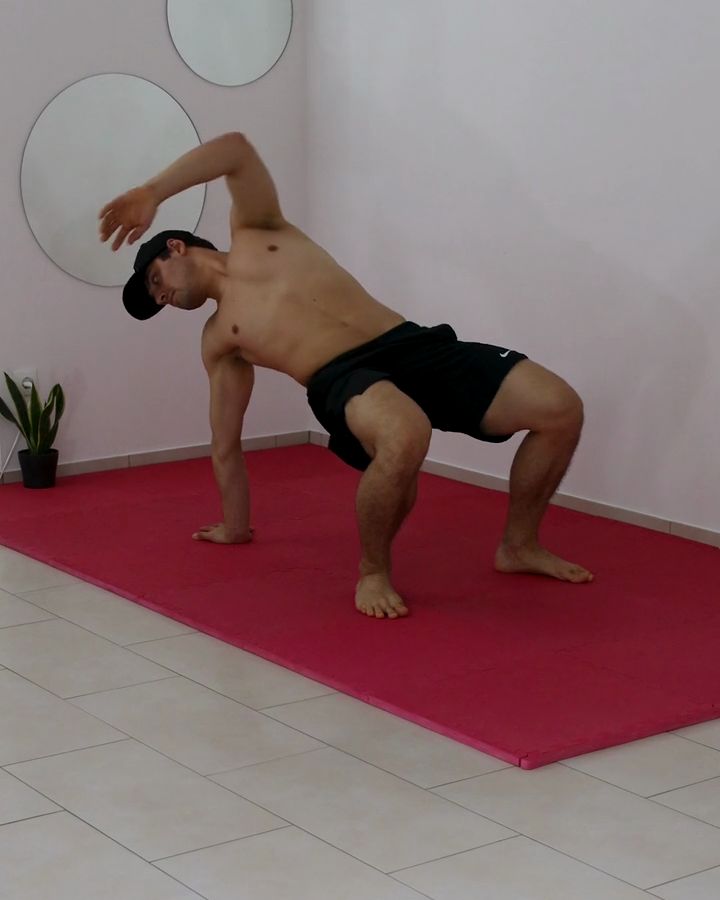
Half Bridge Rotations
The half bridge rotation focuses on a controlled rotational movement with a reduced range of motion. Compared to the full bridge rotation, it has lower intensity, making it a great preparation for developing fundamental stability and mobility in the shoulders and core.
Half Bridge Rotations - the correct execution
- Start in a seated position
- Lean on your hands behind your back
- Release one hand, hyperextend your torso and lift your buttocks off the floor
- Reach with your free hand to the supporting hand
- Extend your hips
- Keep your feet on the floor
- Go back to the starting position and start with the other side
- Each side counts as one repetition
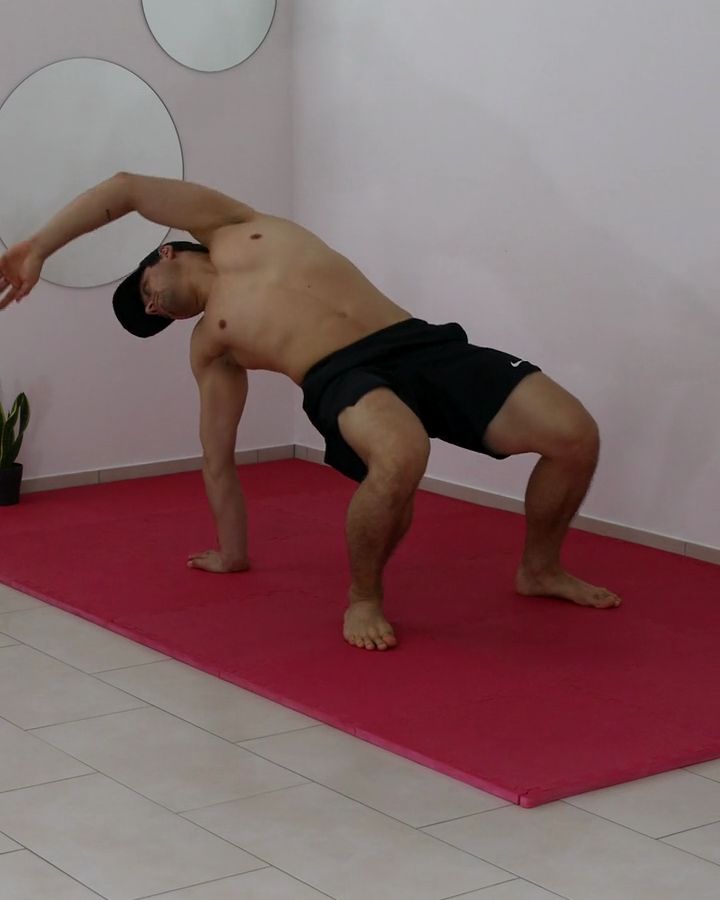
Three-quarter Bridge Rotations
The three-quarter bridge rotation extends the range of motion of the half bridge rotation without reaching the full range of the bridge rotation. It increases the demands on shoulder and core stability while further promoting spinal mobility, but in a controlled manner.
Three-quarter Bridge Rotations - the correct execution
- Slowly lower yourself back to the floor
- Lean on your hands behind your back
- Release one hand, hyperextend your torso and lift your buttocks off the floor
- Move your free hand past the supporting hand until you reach the original supporting position
- Extend your hips
- Keep your feet on the floor
- Return to the starting position and start with the other side
- Each side counts as one repetition
This could also be interesting
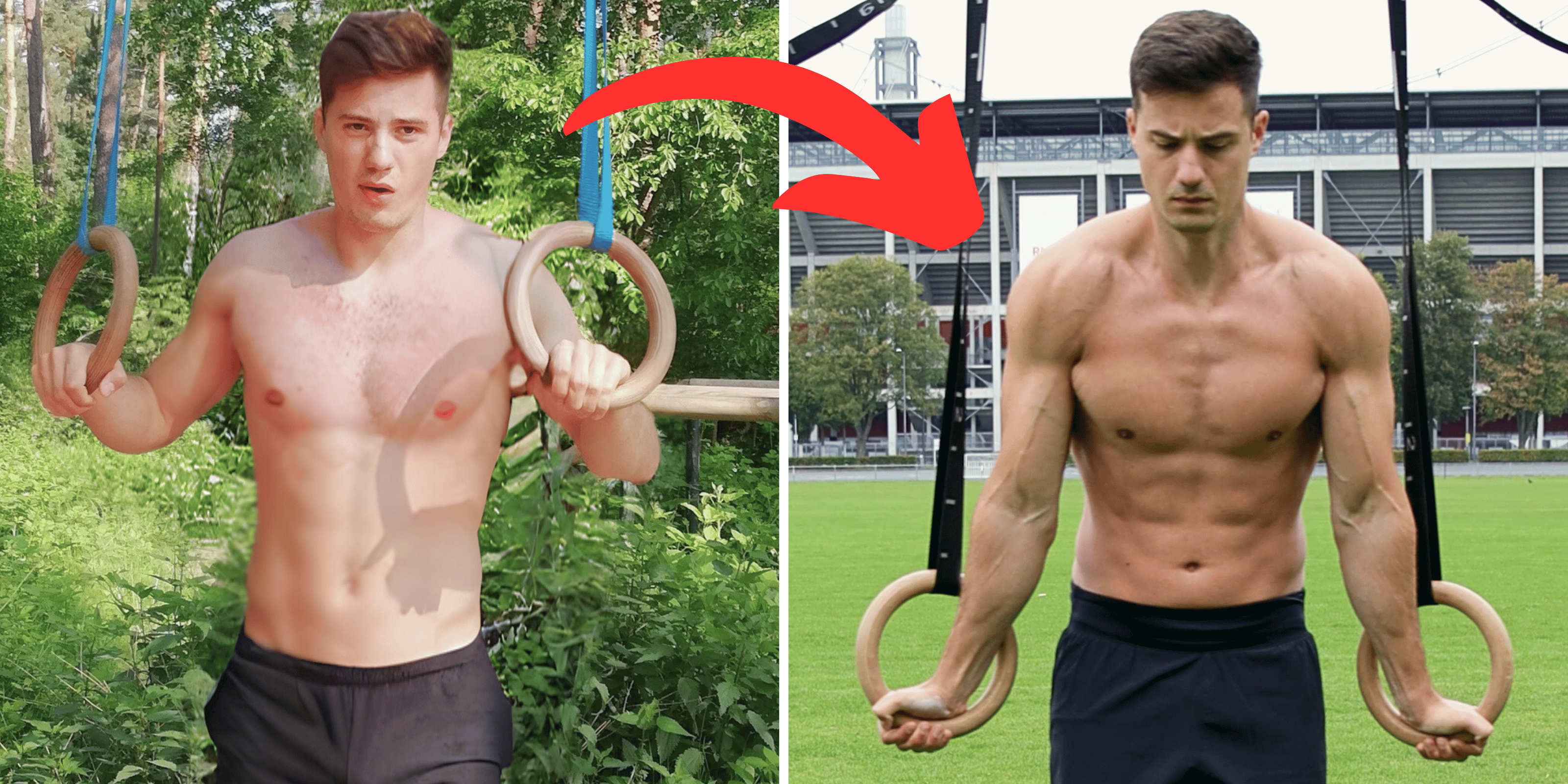
Calisthenics Body Transformation – How to Build a Strong, Lean, and Athletic Physique
Transform your body with Calisthenics! Build muscle, burn fat & achieve a shredded physique with bodyweight training. See real before & after results!
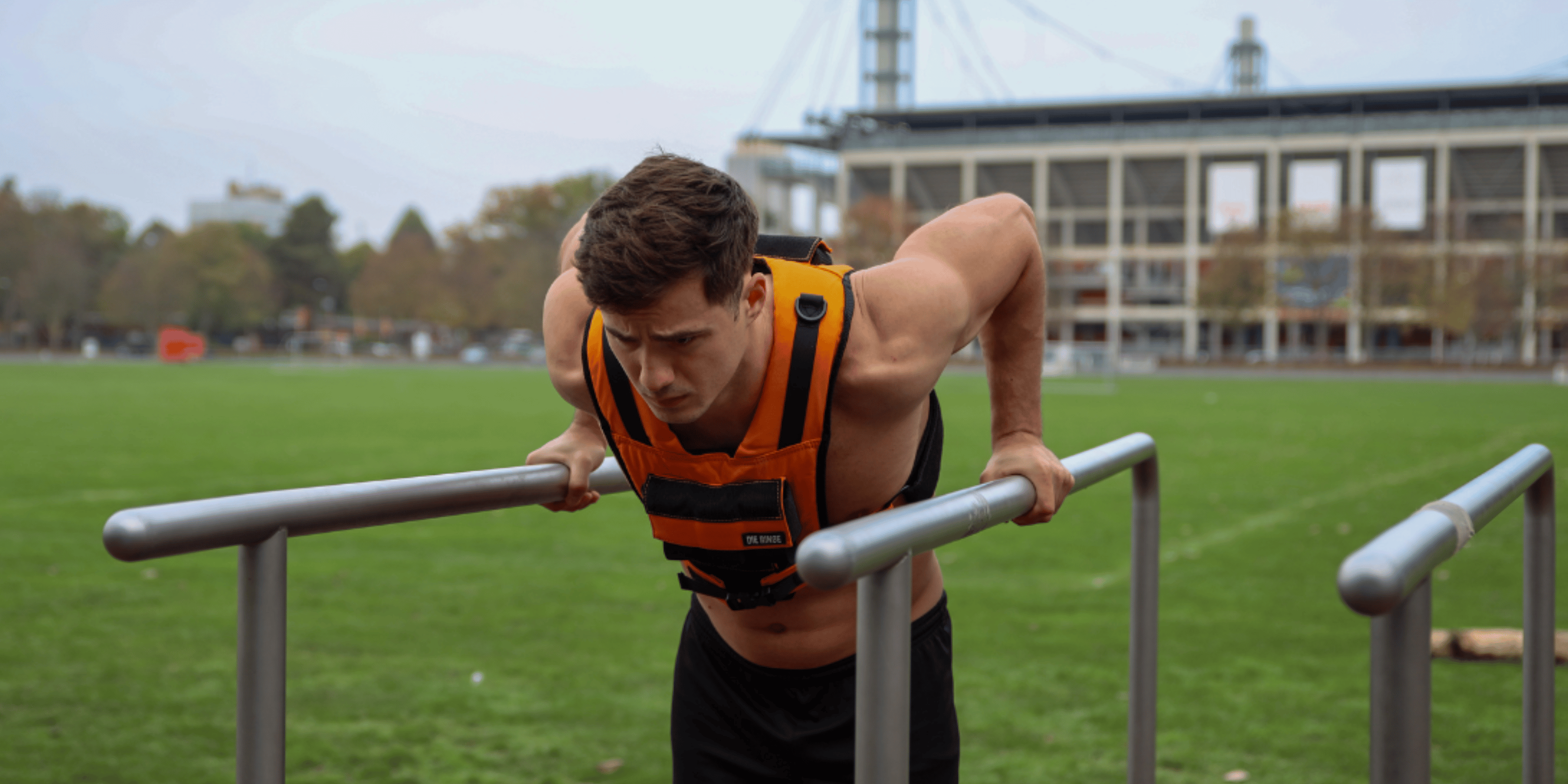
Complete Calisthenics Skills List – 40+ Exercises from Beginner to Pro
Which calisthenics skills should you learn first? And which ones will really help you progress? In this article, you’ll find a complete list of over 40 exercises – from the very basics to the toughest moves for professionals. Each exercise comes with instructions, so you can immediately integrate them into your training.
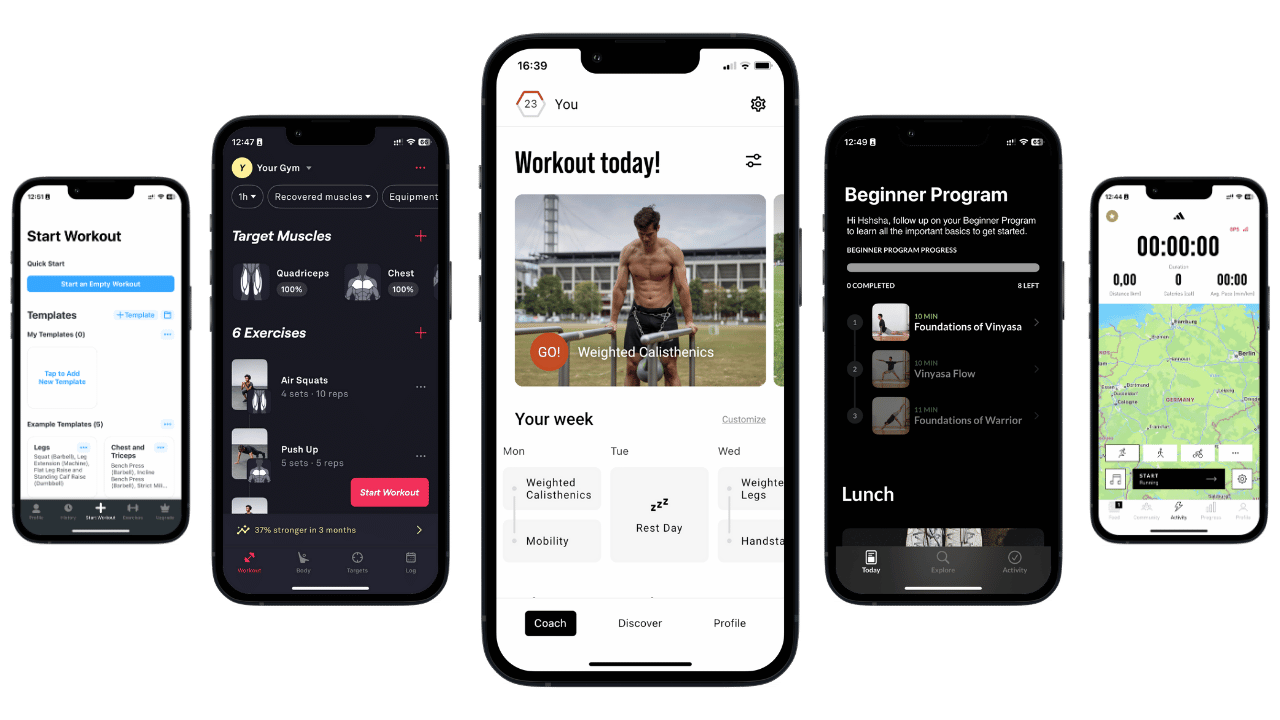
The Best Fitness Apps in 2025: Our Top 10 Recommendations
Don’t miss the best fitness apps of 2025: surprising favorites, free options, and perfect tools for your workouts. Find the ideal app today!